
 2/40 Royal Street Kenwick WA 6107
Before deciding whether to sell a deceased relative’s car, establish who has authority to act for the estate. The question “getting rid of a deceased relative’s car WA” involves more than the vehicle itself: registration, paperwork, keys, access and family views can all affect the next step.
Sorting out who can make decisions first can help prevent delays and keep a clear record of what happens to the car. It also gives the family a practical order for handling vehicle and estate paperwork.
This guide covers what to prepare and how to compare keeping, transferring, selling or removing a car in Western Australia. It explains what to check about the vehicle licence and estate documents before choosing an option. If the estate has authority to dispose of an unwanted car, removal can simplify transport arrangements, especially if the vehicle is scrap, damaged or no longer needed.
Key Takeaways
- Identify who has authority to make decisions for the estate before arranging a sale, transfer or removal.
- Use the WA Department of Transport as the starting point for current vehicle-licence procedures and estate paperwork.
- Compare keeping, transferring, privately selling and removing the car based on its condition, paperwork and the work involved.
- Once the estate decision-maker is ready to act, gather the keys, vehicle records and accurate details about the car’s condition and location.
- For getting rid of a deceased relative’s car WA, removal can be a practical option for an unwanted, scrap or accident-damaged car.
Getting rid of a deceased relative’s car in WA: what to decide first
Handling a car can feel like one more task during estate administration. Separate the immediate practical questions from the longer-term decision. Establish where the vehicle is, who has the keys and whether it’s safe to access. These details help the family understand what needs attention now without deciding the car’s future prematurely.
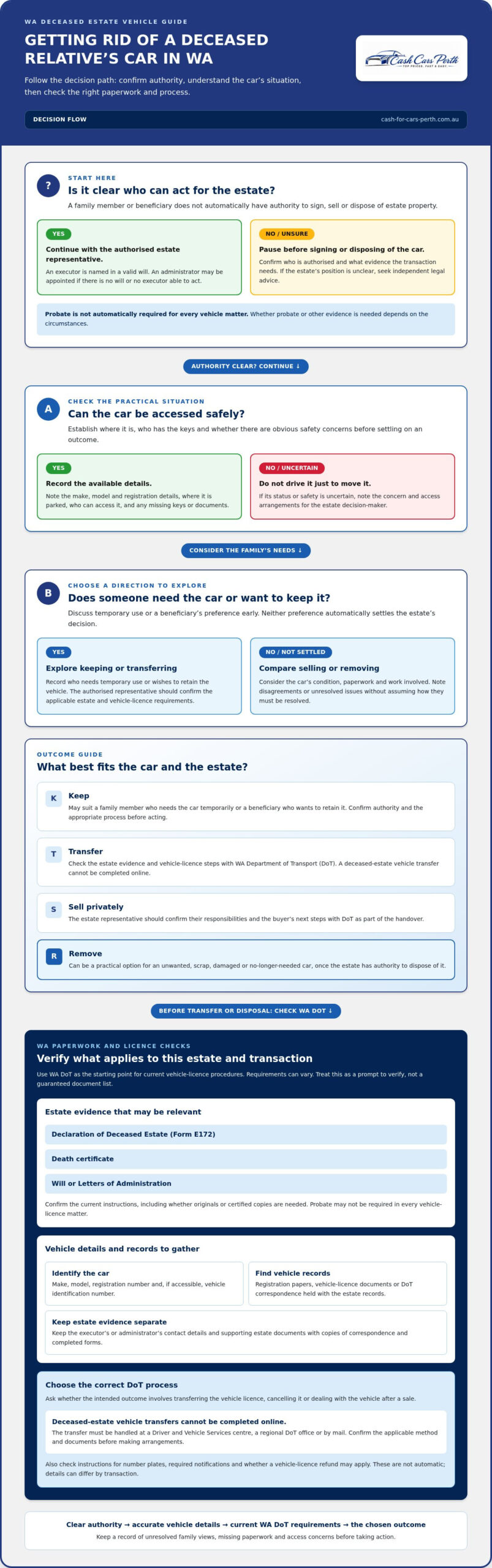
For getting rid of a deceased relative’s car WA, start with authority, not the vehicle’s value or condition. Who can make decisions depends on their legal role and the estate’s circumstances. Being a family member or beneficiary doesn’t automatically give someone authority to sign documents or dispose of estate property.
Who can make decisions about the car?
An executor is named in a valid will to administer the estate. If there’s no executor able to act, or no will, an administrator may be appointed to manage it. Probate is the legal process through which a court may recognise a will and an executor’s authority; learn more about the Probate process. Whether probate or other evidence is needed for a vehicle matter depends on the circumstances, so don’t assume it’s always required.
Before signing, selling or disposing of the car, confirm who is authorised to act and what evidence is needed for the particular transaction. If the estate’s position is unclear, seek independent legal advice before committing to a decision. This can help prevent avoidable disputes or paperwork problems later.
What should the family establish before choosing an option?
Start with the vehicle’s practical situation. Record its make, model and registration details if available, where it’s parked, who can access it and whether there are obvious safety concerns. Don’t drive it just to move it if its status or safety is uncertain. Note any missing keys, documents or access arrangements for the estate decision-maker.
Next, establish what the family needs. Someone may rely on the car temporarily, or a beneficiary may want to retain it. Neither preference automatically settles the estate’s decision, but discussing it early can prevent surprises. Note any disagreement, missing paperwork or urgent storage concern without assuming how it must be resolved.
Use this checklist to frame the decision:
- Authority: Who is the executor or administrator, and is their authority clear?
- Condition: Is the car roadworthy, damaged, non-running or unsafe to access?
- Family needs: Does anyone need temporary use, or want to keep the vehicle?
- Preferred outcome: Is the family leaning towards keeping, transferring, selling or removing it?
These questions don’t force an immediate choice. They give the authorised estate representative a clearer picture of the car, the family’s priorities and any unresolved issues before taking action.
WA paperwork and vehicle-licence steps to check before disposing of the car
Once the estate decision-maker is clear, check the paperwork before arranging a transfer or disposal. The WA Department of Transport (DoT) is the starting point for current vehicle-licence procedures. Requirements can vary with the estate and the action being taken, so use any document list as a prompt to verify, not as a guaranteed checklist.
Keep estate evidence separate from vehicle records. Estate documents help show who is handling the deceased person’s affairs; vehicle details help DoT identify the car and its licence. A relative’s connection to the deceased may not be enough to complete a transaction. The authorised representative should confirm which evidence applies and keep copies of correspondence and completed forms with the estate records.
Which estate documents and vehicle details may be relevant?
The evidence can differ depending on whether probate or administration applies, and probate may not be required in every vehicle-licence matter. WA DoT guidance identifies a completed Declaration of Deceased Estate (Form E172), a death certificate and a will or Letters of Administration as documents that may be relevant. Confirm the current instructions, including whether originals or certified copies are needed, before lodging anything.
Gather the vehicle information available to you:
- Make, model, registration number and, if accessible, the vehicle identification number.
- Any registration papers, vehicle-licence documents or DoT correspondence held with the estate records.
- The executor’s or administrator’s contact details and the estate documents that support their role.
Missing paperwork doesn’t automatically determine the next step. Check DoT’s current guidance for replacements and acceptable evidence rather than relying on an old form or someone else’s experience.
What should the executor check with WA authorities?
Ask DoT which process applies to the intended outcome: transferring the vehicle licence, cancelling it or dealing with the vehicle after a sale. Current WA guidance states that a deceased-estate vehicle transfer can’t be completed online; it must be handled at a Driver and Vehicle Services centre, a regional DoT office or by mail. Confirm the applicable method and documents before making arrangements.
Check the instructions for number plates, required notifications and whether a vehicle-licence refund may apply. These details can differ by transaction, so don’t treat plates or a refund as automatic. If the car is sold, clarify the estate representative’s responsibilities and the buyer’s next steps with DoT as part of the handover.
In short, establish authority, gather available vehicle details and records, confirm current requirements with WA DoT, then arrange the transfer or disposal. This is practical guidance, not legal advice; seek independent advice if the estate’s authority or paperwork is unclear. Once disposal is authorised, cash for unwanted cars can be an option for an unwanted vehicle.
Keep, transfer, sell or remove the car: compare the practical options
There’s no single right outcome for every estate vehicle. The best fit depends on the estate’s wishes, the car’s condition and whether anyone has a practical use for it. Use this comparison to narrow the options, then confirm the relevant WA paperwork before the authorised representative acts.
| Option | Authority | Condition and paperwork | Effort and likely next action |
|---|---|---|---|
| Keep | The estate decision-maker must approve retention. | Consider roadworthiness, upkeep and where it will be kept. Confirm how the estate will hold the vehicle. | Arrange secure parking and clarify who will use it and manage ongoing responsibilities. |
| Transfer to an eligible person | The authorised representative handles the estate’s decision; a beneficiary’s preference alone isn’t authority. | Eligibility, transfer evidence and vehicle-licence requirements need checking with WA authorities. | Confirm the intended recipient and current transfer process, then prepare the required documents. |
| Private sale | The person authorised to deal with the estate must approve and manage the sale. | Condition and roadworthiness can affect how the car is presented and handed over. Check sale and licence paperwork. | Allow time to prepare the vehicle, communicate with buyers and complete the required transaction steps. |
| Vehicle removal | Use this option only after the estate has authority to dispose of the car. | Can suit an unwanted, scrap or accident-damaged vehicle. Confirm the relevant disposal and vehicle-licence steps. | Arrange removal rather than organising transport yourself; the next step is to provide accurate vehicle and location details. |
When might keeping or transferring the vehicle make sense?
Keeping the car may suit an estate where a family member needs it and the vehicle is practical to retain. A transfer may be worth considering if the estate intends for an eligible person to receive it. In either case, separate the family’s preference from the authority to complete the transaction. Check eligibility and current transfer requirements with the relevant WA authority before making arrangements.
When might a sale or removal be the simpler option?
A sale may suit a vehicle the estate wants to realise value from and that can be prepared for a buyer. The estate can consider the Cash for Cars service as a purchasing option. No sale outcome or amount is guaranteed, so base the decision on the estate’s priorities and the car’s circumstances.
If a car is at the end of its useful life, damaged or difficult to move, removal may reduce the work of arranging transport. An authorised representative can consider scrap car removal for an unwanted vehicle. When getting rid of a deceased relative’s car WA, weigh the practical work involved alongside family needs, condition and paperwork, then choose an option the estate is authorised to carry out.
Checklist for preparing a deceased estate car
Once the authorised estate decision-maker is ready to proceed, preparation can make the next step clearer. Gather what’s available, record what’s unknown and agree on how the vehicle can be accessed. Don’t move or drive it just to make arrangements easier. WA guidance says a deceased person’s car must not be driven before its registration is transferred or cancelled; if it needs to be moved, arrange towing or other transport.
For getting rid of a deceased relative’s car WA, follow this sequence and mark missing details as unknown rather than letting them stall preparation:
- Confirm the estate decision. Make sure the authorised representative has decided what will happen to the car.
- Collect the keys and records. Find available keys, registration papers, vehicle-licence documents and relevant correspondence.
- Describe the vehicle accurately. Note its condition and any access or safety issues. Mark unknown details as unknown rather than guessing.
- Agree on access. Identify who can provide entry to the property and whether the car is blocked in, behind a locked gate or in another difficult position.
- Keep a record. File communications and transaction documents with the estate paperwork.
What information should you gather about the car?
Record the make, model, approximate year, registration number and registration status, if known. Add the vehicle’s location, whether it starts, visible damage, missing keys and any access difficulty. These details help explain the car’s situation when arranging the next step. If you can’t verify a fact, write “unknown” rather than estimate it.
Be specific about access. For example, note whether the car is in a driveway, garage or shared parking area, whether the entrance is narrow, and who can unlock a gate. Don’t attempt to start the vehicle just to test it, or shift it to a more convenient spot. Pass on the information so the authorised representative can decide how access should be managed.
How can you keep the family and estate records organised?
Keep the paperwork together and easy to follow. Record the authorised decision, the date it was made and relevant family communications. If there are differing views, note the issue and any agreed next step without presenting an unresolved discussion as a final decision.
After the car is transferred, sold or removed, keep receipts, transfer records and disposal paperwork with the estate documents. A simple paper or digital folder can help the representative track what was decided and completed. These records support clear administration, but don’t guarantee a particular legal outcome.
Before arranging removal, use your notes to describe the vehicle and its access needs clearly.
Arrange deceased-estate car removal in Perth and surrounding WA areas
Once the authorised estate representative has chosen disposal, removal can be a practical way to deal with an unwanted car without arranging transport yourself. Cash For Cars Perth buys and removes unwanted, scrap and accident-damaged vehicles across Perth and surrounding areas. Service locations include Joondalup, Mandurah, Rockingham, Morley, Osborne Park, Karrinyup, Subiaco, Fremantle, Bibra Lake, Success, Beeliar, Naval Base, Orelia, Warnbro, Secret Harbour and Golden Bay. The representative remains responsible for authorising the handover and keeping the estate’s records in order.
What to expect when arranging removal
Prepare a clear description of the vehicle and its location before arranging removal. Share what you know and label anything uncertain rather than guessing. Useful details include:
- Make, model, registration number and approximate year, if available.
- Known condition, such as whether it starts, has visible damage or is incomplete.
- Where it’s parked and any access details, such as a locked gate or a confined driveway.
- Whether keys and vehicle records are available.
Agree who will provide access and be available for the handover. That person should be the authorised estate representative or someone acting with their approval. If the car is in a shared or restricted area, organise access with the relevant person before the agreed arrangements. Don’t move or drive the vehicle unnecessarily.
Cash For Cars Perth provides free removal for unwanted vehicles and cash payments for vehicles it purchases. Keep the arrangement focused on the vehicle’s details, access and agreed handover, without assuming a particular collection time or payment amount.
If removal is the estate’s chosen option, cash for unwanted cars offers a practical way to dispose of an unwanted vehicle. Sharing accurate information early can help avoid confusion at handover and reduce the work involved in managing the car.
Make the next step straightforward
Before handover, note what was agreed and keep relevant transaction records with the estate documents. Gather the available keys and records, and make sure the authorised representative understands what is being handed over. These steps help keep the process organised while the rest of the estate is being managed.
If the estate has authority to dispose of the vehicle and removal is the preferred option, arrange car removal with Cash For Cars Perth.
Take the next step with confidence
A clear handover can help keep this task manageable. Choose one authorised estate representative to coordinate the vehicle decision, keep the family informed and retain relevant records. This gives everyone a clear point of contact while the rest of the estate is being settled.
If getting rid of a deceased relative’s car WA means disposing of an unwanted vehicle, removal can take transport arrangements off the estate’s hands. Cash For Cars Perth buys unwanted vehicles, provides cash payments and offers free removal for unwanted vehicles across Perth and surrounding regions. The authorised representative should make the arrangements and keep a record of the completed transaction.
You don’t need to resolve every estate matter at once. Focus on the car’s next authorised step and take it one task at a time.
With a clear decision and practical plan, you can move this part of the estate forward with less stress.
Frequently Asked Questions
Can an executor sell a deceased person’s car in WA?
Yes, an executor can sell the car if they have authority to manage the estate and the sale is consistent with their role. Being named in a will doesn’t automatically resolve every practical requirement: the executor may need to show evidence of their authority for the transaction. Keep a record of the sale and its proceeds with the estate accounts, and don’t treat a beneficiary’s request as permission to sell.
Do I need probate to transfer a deceased relative’s car in Western Australia?
Not necessarily. WA guidance indicates probate or Letters of Administration may not always be required for a vehicle-licence transfer from a deceased estate. The evidence needed can depend on the estate and the person applying, so check the Department of Transport’s current instructions rather than assuming a grant is always essential or never needed. If you’re unsure what applies, get independent legal advice before lodging the transfer.
How do I transfer or cancel a deceased person’s vehicle licence in WA?
Start with the WA Department of Transport’s current instructions for the specific action. A deceased-estate vehicle-licence transfer can’t be completed online; it must be handled through a Driver and Vehicle Services centre, a regional DoT office or by mail. Cancellation has its own instructions, so confirm the process, forms and plate handling before acting. Don’t drive the car while the licence remains in the deceased person’s name.
Can I get rid of the car before probate is granted?
Possibly, but the absence of a probate grant doesn’t by itself authorise a relative to sell or dispose of the car. First establish who can act for the estate and whether that person has the authority and evidence needed for the proposed transaction. If the vehicle needs urgent attention, separate practical steps such as documenting its condition from the final disposal decision. Seek legal advice if authority is unclear.
What documents may be needed to remove a deceased relative’s car?
Documents that may be relevant include a completed Declaration of Deceased Estate (Form E172), the death certificate, and the will or Letters of Administration. WA guidance generally refers to originals or certified copies, but requirements can depend on the circumstances. The authorised representative should confirm the current requirements with DoT and have available vehicle-licence records or registration details. Don’t rely on this as a guaranteed checklist for every estate.
Can a deceased estate car be removed if it is unregistered or damaged?
An unwanted, damaged or end-of-life vehicle can be considered for removal once the estate representative is authorised to arrange disposal. Give accurate details about its condition, registration status and access, particularly if it won’t start or is difficult to reach. Don’t drive an unregistered car to move it; arrange suitable transport instead. Cash For Cars Perth handles unwanted, scrap and accident-damaged vehicles in Perth and nearby areas such as Fremantle and Mandurah.
What happens to the number plates when a deceased person’s car is disposed of in WA?
Check the Department of Transport’s current instructions before handing over or disposing of the plates. The correct steps can depend on whether the vehicle licence is being cancelled or transferred, so don’t assume the plates should stay on the car or be removed. Ask DoT about any required plate return or other action, and keep a record of what was done. Personalised plates may have separate transfer arrangements.
0 Comments