
 2/40 Royal Street Kenwick WA 6107
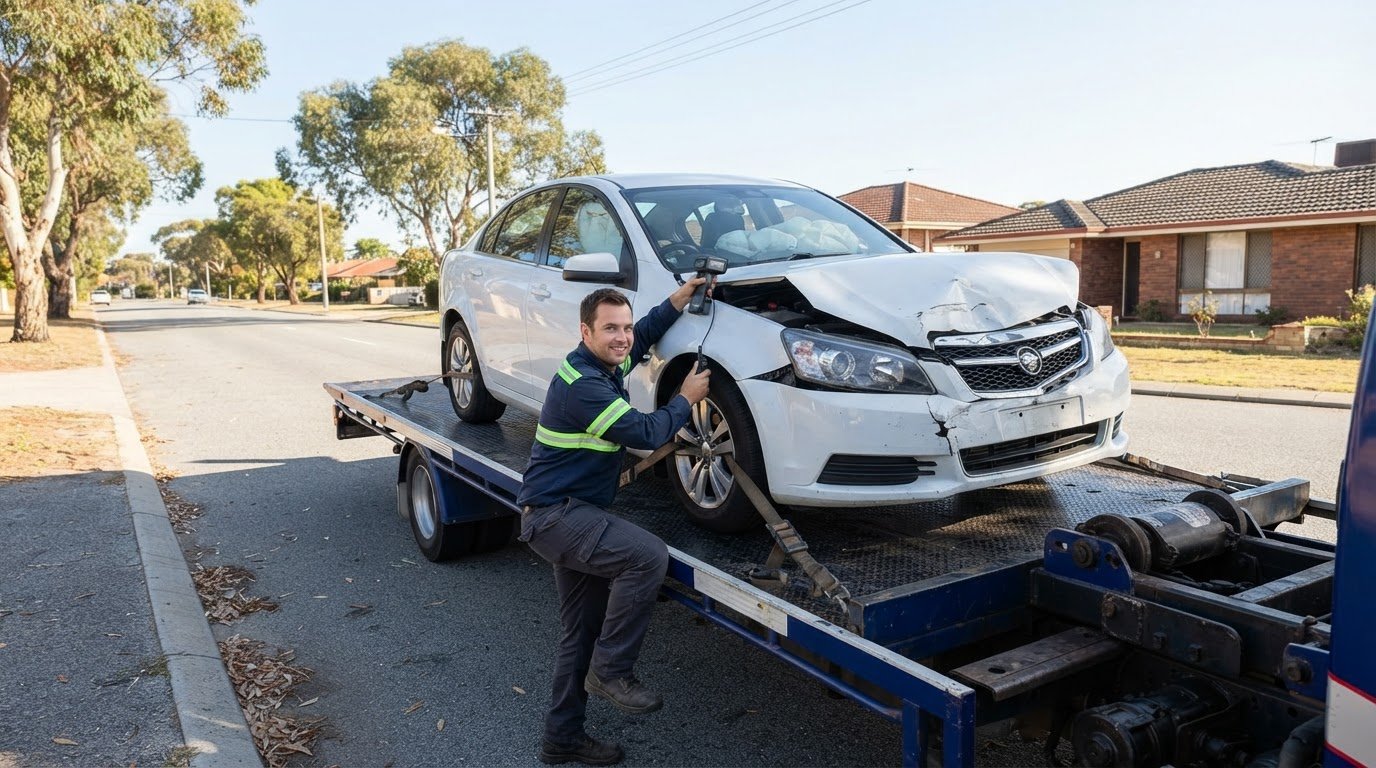
A statutory write-off isn’t a car that can be repaired and returned to the road. In Western Australia, it can’t be re-registered for road use, so finding statutory write-off buyers WA means looking for a parts- or scrap-focused sale, not a road-going resale.
It’s understandable to be unsure what this status means, what you can legally sell and who will take a damaged or non-running vehicle. This guide explains the difference between statutory and repairable write-offs, what to check before selling and which details to prepare when requesting an offer. A PPSR search using the VIN can help you check the vehicle’s recorded status, and it’s useful to have proof of ownership ready.
Cash For Cars Perth buys unwanted, scrap and accident-damaged vehicles and provides removal across Perth and surrounding areas, including Mandurah, Rockingham, Fremantle and Joondalup. Read on for a practical overview of the WA rules and the steps to arrange a sale and removal.
Key Takeaways
- Understand how statutory and repairable write-offs differ, and why legal status isn’t the same as whether a vehicle can currently be driven.
- Learn what WOVR records, PPSR searches and vehicle documents can each help you check before arranging a sale.
- Use the VIN to match the vehicle to its records, then prepare its registration details and a clear description of the damage.
- Follow a practical sequence to prepare the vehicle, describe its condition and complete the handover.
- Find out how statutory write-off buyers WA can provide a disposal option, with vehicle removal across Perth and surrounding areas.
What does statutory write-off mean in Western Australia?
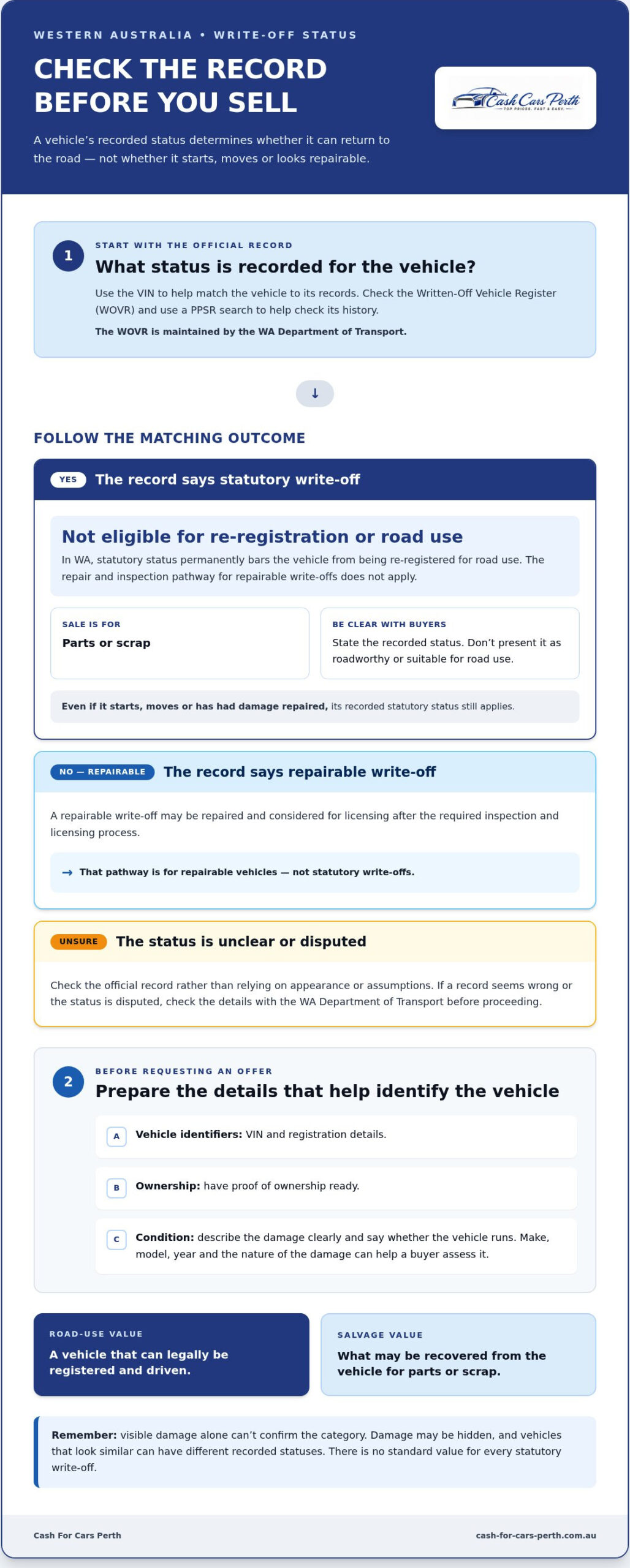
A statutory write-off is a vehicle assessed as so severely damaged that it cannot be repaired for road use or re-registered in Australia. In Western Australia, this differs from a repairable write-off, which may be repaired and follow a separate inspection and licensing process.
The classification is about the vehicle’s legal status, not simply whether it starts, moves or looks badly damaged. A car might still be capable of being driven after an incident, but that doesn’t make it legal to use on the road if it has been recorded as a statutory write-off. Visible damage alone doesn’t tell you which category applies, either.
How is a vehicle classified as a statutory write-off?
Write-off status follows an assessment of damage against applicable criteria. An insurer may assess a vehicle after a claim, and other authorised parties may also be involved in assessment and reporting. The assessment considers the nature and severity of the damage, which may include structural, fire or flood damage. The relevant category is recorded on the Written-Off Vehicle Register (WOVR), maintained by the WA Department of Transport.
There isn’t one visual checklist an owner can reliably use to identify the category. Damage may be hidden, and vehicles with similar-looking damage can have different recorded statuses. Check official records rather than relying on a quick inspection or an assumption based on whether the car still runs.
What is the difference between statutory and repairable write-offs?
A statutory write-off is permanently barred from re-registration for road use. A repairable write-off is a different category: the vehicle may be repaired, then go through the required inspection and licensing pathway before it can return to the road. That pathway applies to repairable vehicles, not statutory ones.
- Statutory: Not eligible for re-registration or road use. Disposal is limited to parts or scrap.
- Repairable: May be repaired and considered for licensing after the required process.
Don’t treat “write-off” as a single status. The distinction affects what can happen to the vehicle next. If you’re unsure which category applies, use the official WOVR record and a PPSR search to help check its history. Registration documents and the vehicle’s condition provide useful context, but they don’t replace checking the recorded status.
This matters when deciding how to describe the vehicle to a buyer. Don’t advertise or present a statutory write-off as suitable for road use, even if it appears driveable. Owners looking for statutory write-off buyers WA should approach the sale as disposal for parts or scrap, not as a normal road-registered car sale. Being clear about its status helps set accurate expectations before you discuss condition or removal.
What statutory write-off status means for selling and using the vehicle
In Western Australia, statutory write-off status rules out returning the vehicle to road use. It can’t be re-registered, even if it appears driveable or someone believes it could be repaired. The repair and inspection pathway for a repairable write-off doesn’t change this restriction.
This affects how you sell it. A statutory write-off isn’t an ordinary road-registered car being transferred for someone else to drive. It can only be sold for parts or scrap, so describe its status accurately and don’t present it as roadworthy. Ownership or disposal paperwork is separate from transferring a registered vehicle for road use.
Can a statutory write-off be re-registered in WA?
No. WA guidance treats a statutory write-off as permanently ineligible for re-registration. The inspection pathway for repaired vehicles applies to repairable write-offs, not statutory ones. If a record seems wrong or the vehicle’s status is disputed, check the details with the WA Department of Transport before relying on an assumption or proceeding with a sale.
Keep the distinction clear in discussions with a buyer. A vehicle that starts, moves or has had some damage repaired is still subject to its recorded statutory status. The sale must not imply that it can return to public roads. Instead, discuss disposal for parts or scrap and make the recorded classification clear from the outset.
Does statutory status mean the vehicle has no value?
Not necessarily. Road-use value and salvage value are different. A vehicle that can’t be registered may still be assessed for disposal, but there’s no standard value for every statutory write-off. The outcome depends on the particular vehicle and what can be recovered from it.
Details such as make, model, year, condition and the nature of the damage can help a buyer assess the vehicle. Recoverable materials may also be relevant, but don’t assume a particular component is usable or that two similar vehicles will have the same value. Fire, flood or structural damage can affect what remains suitable for recovery.
- Road-use value relates to a vehicle that can legally be registered and driven.
- Salvage value relates to what may be recovered from the vehicle for parts or scrap.
When contacting statutory write-off buyers WA, accurate details are more useful than describing the vehicle simply as “damaged”. State its recorded status, explain what you know about its condition and be upfront about whether it runs. Cash For Cars Perth buys unwanted, scrap and accident-damaged vehicles, with scrap car removal across Perth and surrounding areas. This offers a practical disposal option without treating the vehicle as a road-going sale.
How to check a statutory write-off record before seeking a buyer
Before describing the vehicle or requesting an offer, match its identity and write-off history against reliable records. In WA, the Written-Off Vehicle Register (WOVR) is the key register for written-off vehicle information. A PPSR search can help check the vehicle’s recorded history, while your vehicle and insurer documents provide details to compare.
Start with the VIN, or Vehicle Identification Number. It identifies the specific vehicle and helps distinguish it from another car with a similar make, model or registration. Check the VIN on the vehicle and compare it with the number on the paperwork and search results. A mismatch needs attention before you rely on a record or describe the vehicle to a buyer.
Which records should WA sellers check?
Each source serves a different purpose. Use them together rather than treating one document as a complete substitute for the others.
| Record or document | What it can help you check |
|---|---|
| WOVR | Whether the vehicle has a recorded written-off status, including its category. |
| PPSR search | Vehicle history information associated with the VIN, including recorded write-off status. It can also show other relevant interests recorded against the vehicle. |
| Vehicle documents | Details such as the VIN, registration information and vehicle identity to compare with search results. |
| Insurer or assessment documents | Information about the damage assessment and the status communicated during the claim or assessment process. |
The PPSR is useful for checking vehicle history, but it doesn’t replace every WA licensing or registration check. Search steps and available information can change, so use the current PPSR service and WA Department of Transport guidance when checking a record.
What if the VIN or write-off status does not match?
Pause before describing or offering the vehicle for sale. Compare the VIN on the vehicle with the VIN on the PPSR result, registration documents and insurer or assessment paperwork. Check for a simple transcription error, but don’t assume that explains a different write-off category or an unclear record.
If the details still conflict, contact the WA Department of Transport for clarification and follow up with the insurer or assessor whose paperwork differs. Don’t alter, hide or work around a record. Keep copies of the search result and relevant documents so you can explain what you’ve checked when arranging disposal.
Once the details line up, you’ll be better placed to give a buyer an accurate account of the vehicle. The cash for cars service provides an enquiry route for owners in Perth and surrounding areas who want to sell an unwanted or damaged vehicle.
How to prepare a statutory write-off for sale and removal in WA
A clear handover starts with accurate information. Confirm the vehicle’s recorded status, gather its details, describe its condition honestly, then organise collection and complete the necessary paperwork. Preparation helps avoid surprises, particularly if the car is damaged, incomplete or difficult to access.
- Confirm its status. Check the written-off vehicle record and resolve any mismatch before describing the vehicle.
- Gather vehicle details. Note the VIN, registration details if available, make, model and year.
- Describe its condition. Explain the damage, missing components, whether it runs and whether it can be moved.
- Plan collection. Share the location, access instructions and any hazards that could affect pickup.
- Complete the handover. Have ownership and vehicle documents ready, and check the WA Department of Transport’s current requirements for your circumstances.
What details should you have ready?
Prepare the VIN and any available insurer or assessment paperwork, along with registration details if you have them. Include the vehicle’s make, model, year and exact location. Be specific about major damage, missing parts and whether the vehicle rolls or can be moved. If it’s an accident-damaged vehicle, accident car removal services can help arrange collection.
Share what you know and make clear where details are uncertain. For example, say the vehicle doesn’t start rather than guessing why. Mention whether it’s in a driveway, garage or another location, and note any narrow access, low clearance or other restrictions. These practical details help the buyer prepare for collection.
How to make collection straightforward
Give clear directions to the vehicle and explain how a collection vehicle can reach it. Remove personal belongings from the cabin and boot before handover. Point out loose glass, sharp metal, leaking fluids or other visible hazards, and flag locked gates or restricted access in advance. Don’t try to move a vehicle if doing so could be unsafe.
For a damaged or non-running car, scrap car removal offers a practical disposal option. Cash For Cars Perth provides vehicle removal across Perth and surrounding areas, including Mandurah, Rockingham, Fremantle and Joondalup.
Keep ownership and transfer paperwork with the vehicle details, but don’t assume one process applies to every write-off. Requirements may depend on the vehicle’s circumstances and registration status. Check current WA Department of Transport guidance and follow the applicable steps for the handover. Keep copies of documents you provide and record that the vehicle has been handed over.
Once the status, condition and access details are ready, statutory write-off buyers WA can assess the vehicle with a clearer picture of what’s being collected. This preparation keeps the discussion factual and helps make removal arrangements straightforward.
Find statutory write-off buyers in Perth and arrange removal
A statutory write-off needs a disposal option that fits its status. Cash For Cars Perth buys unwanted, scrap and accident-damaged vehicles and provides removal across Perth and surrounding areas. For owners seeking statutory write-off buyers WA, the business provides a practical way to arrange disposal without presenting a damaged vehicle as roadworthy.
Share the vehicle’s recorded status upfront. Include its make, model, year, VIN, location and a clear account of its condition. Mention whether it runs, whether major components are missing and whether access could complicate collection. Accurate details help frame the enquiry and avoid confusion about what’s being offered.
What happens when you request a vehicle purchase?
Start with the facts about the vehicle and where it’s located. Cash For Cars Perth buys vehicles and arranges removal. The service focuses on buying and removing unwanted, scrap and accident-damaged vehicles, not repairing them or selling individual parts. The offer is based on the details provided, so share the vehicle’s condition clearly when requesting one.
Review this scrap car removal guide for practical context on disposing of an unwanted vehicle. Keep the written-off status and damage description consistent with the records you’ve checked. If you’re unsure about a detail, say so rather than guessing.
Which Perth-area owners can enquire?
Vehicle owners in Perth and nearby areas can enquire about removal. Coverage includes Mandurah, Rockingham, Fremantle and Joondalup. The business also focuses on unwanted, scrap and accident-damaged vehicles, making it a relevant option when a statutory write-off is no longer suitable for road use.
Have the main details ready before you request an offer:
- Vehicle identity: make, model, year and VIN.
- Status and condition: write-off category, damage description and whether it can be moved.
- Collection location: suburb, access details and any visible hazards or restrictions.
Use clear, factual information. For example, explain if the vehicle is non-running, has significant accident damage or is stored behind a locked gate. This gives the enquiry a useful starting point and helps align removal arrangements with the vehicle’s actual condition.
To discuss a damaged or scrap vehicle, provide its details and location to request a cash offer. Cash For Cars Perth offers free vehicle removal across Perth and surrounding areas.
Request a cash offer for your vehicle
Move forward with a clear disposal plan
Once you’ve decided the vehicle isn’t for road use, focus on a disposal path that matches its recorded status. A clear, accurate enquiry helps set expectations from the start and keeps the conversation centred on the vehicle you have, not what it might have been before the damage.
If you’re comparing statutory write-off buyers WA, keep the vehicle’s status and condition details together. That way, you can explain the situation consistently and make a decision based on the information available, without treating a statutory write-off like an ordinary car sale. You don’t need every answer before making an enquiry. Start with the details you know and be upfront about anything uncertain.
Cash For Cars Perth can provide a cash offer for an unwanted vehicle and arrange its removal. Get in touch when you’re ready to discuss your vehicle.
A straightforward plan can make letting go of a damaged vehicle feel more manageable.
Frequently Asked Questions
Can you sell a statutory write-off in Western Australia?
Yes, but it can only be sold for parts or scrap, not as a vehicle for road use. Be clear about its recorded status from the start, whether you’re speaking with a buyer or preparing sale documents. When contacting statutory write-off buyers WA, give an accurate description of the vehicle and its condition.
Can a statutory write-off ever be re-registered in WA?
No. A statutory write-off can’t be re-registered for road use in WA. The inspection and licensing pathway for a repaired vehicle applies to repairable write-offs, not statutory ones. If the vehicle’s record seems inconsistent with your insurer’s paperwork, don’t assume it can be licensed or describe it as roadworthy. Ask the WA Department of Transport to clarify the record before relying on it.
What is the difference between a statutory and repairable write-off?
A statutory write-off is permanently ineligible for road registration, while a repairable write-off may be repaired and considered for licensing after the required inspection process. For example, a vehicle listed as repairable isn’t automatically ready for the road, and a statutory vehicle doesn’t become repairable simply because damage has been fixed. Check the recorded category before making decisions about the vehicle’s future.
How can I check whether a vehicle is recorded as a statutory write-off?
Use the vehicle’s VIN to run a PPSR search and check the written-off status shown in the vehicle history. Compare the result with the VIN on the car and any insurer or assessment documents. Make sure every character matches, as a transposed digit can lead you to information for a different vehicle. If the category or identity doesn’t line up, seek clarification from the WA Department of Transport.
Can I sell a statutory write-off if it is damaged or cannot be driven?
Yes. A vehicle doesn’t need to be driveable to be considered for disposal as a statutory write-off, but its condition affects how a buyer assesses it. Explain whether it starts, rolls or has missing components, and describe obvious damage such as fire or flood impact. Don’t attempt to drive it or present it as roadworthy. Include its location and any access limitations in your enquiry.
What information should I have ready when arranging statutory write-off removal?
Have the VIN, make, model, year and location ready, along with registration details if available. Keep insurer or assessment paperwork nearby, and note whether the vehicle can be moved, what damage it has and whether parts are missing. Mention practical collection details too, such as a locked gate, narrow driveway or loose hazards. Clear information helps avoid misunderstandings when discussing the vehicle and its removal.
Do statutory write-off buyers collect vehicles in Perth and surrounding areas?
Cash For Cars Perth provides vehicle removal in Perth and surrounding areas, including Joondalup, Mandurah, Rockingham and Fremantle. Enquiries are also relevant across suburbs such as Morley, Osborne Park, Karrinyup, Subiaco, Bibra Lake, Success, Beeliar, Naval Base, Orelia, Warnbro, Secret Harbour and Golden Bay. Share the vehicle’s suburb and condition when enquiring about removal for an unwanted, scrap or accident-damaged vehicle.
0 Comments