
 2/40 Royal Street Kenwick WA 6107
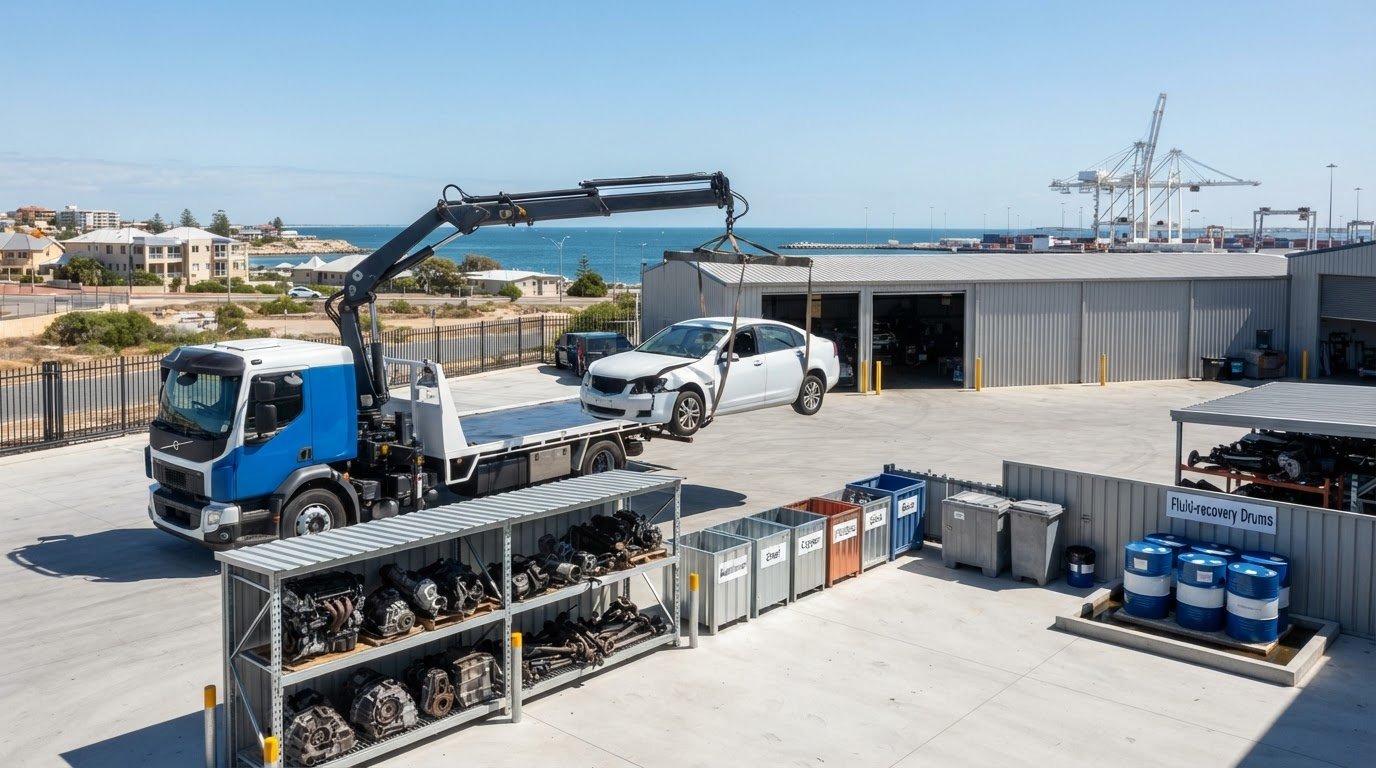
A written-off car can still have useful materials and components. Environmentally friendly car wrecking in Fremantle separates reusable parts, recycles metals and plastics, and handles vehicle fluids responsibly. Wreckers may accept cars in a range of conditions, including accident-damaged, unregistered, rusty, broken-down and written-off vehicles.
It’s reasonable to want a straightforward way to dispose of an unwanted car and understand what may affect a cash offer. Cash For Cars Perth assesses details such as the vehicle’s make, model, year and condition, as well as the potential value of reusable components and recyclable materials.
This guide explains how the wrecking process works, how responsible recycling helps reduce automotive waste, and what can influence an offer. You’ll also learn what to expect when arranging removal, so you can make a clear decision about your vehicle’s next step.
Key Takeaways
- Reusable components and recyclable materials can give an unwanted vehicle further value while reducing waste.
- Responsible wrecking separates reusable parts and recyclable materials, and handles fluids carefully.
- Make, model, year, condition and reusable components all help shape a cash offer.
- Accident-damaged, unregistered, rusty, broken-down and written-off vehicles may still be suitable for wrecking.
- Share clear details about your vehicle and location to take the next step towards removal and a cash offer.
Used OEM parts and their environmental benefits
Reusing original equipment manufacturer (OEM) parts keeps serviceable components in use after a vehicle reaches the end of its road life. For Fremantle owners, the key is identifying parts that remain suitable for reuse before the vehicle is dismantled.
Reusing Used OEM Parts
Used OEM parts come from vehicles and are made for particular makes and models. Reusing a serviceable engine, mirror or door can reduce demand for newly manufactured replacements and keep that component out of disposal. Recycled parts may cost less than new parts. Check a part’s condition and compatibility with your vehicle’s make and model before choosing it.
Part reuse also makes better use of the materials and manufacturing already invested in a component. A usable wheel, seat or transmission may have value beyond the vehicle it came from. The environmental benefit depends on the part being suitable for reuse, not simply removed from the car. Responsible dismantling separates parts for assessment instead of treating the whole vehicle as scrap.
Dismantling and Recycling Reusable Parts
Dismantling starts by identifying components that may be reused, such as batteries, engines, mirrors, brake pads, rotors, tyres, wheels, seats, doors and fenders. Workers remove selected parts and separate them from materials destined for recycling. This helps prevent reusable components from being mixed with crushed metal or other waste.
After removal, parts can be assessed and organised by type and vehicle details. A mirror, for example, needs to suit the relevant model and remain usable. Engines, transmissions and catalytic converters may also be salvaged for reuse. Separating these items supports more resource-conscious disposal and gives suitable components another potential use.
Recycled-parts inventories help buyers identify available components by vehicle or part type. Examples include an engine, a set of wheels or a door from a dismantled vehicle. Inventory and sales are separate from disposal itself: not every removed part is suitable for reuse, and vehicle condition affects what can be recovered. Reusing an appropriate component can be a convenient alternative to buying new, while unsuitable material can be directed towards recycling.
Donating a vehicle or usable parts is another option to consider before disposal. Identify components in sound condition, such as an intact seat or mirror, and establish whether a community organisation can use them. Keep ownership paperwork and record what is being donated. Donation is most useful when the recipient has a practical use for the item and collection can be arranged.
For a car sale or scrap handover in Western Australia, prepare photo identification, registration papers if available, and a signed transfer form. Keep these together with proof of purchase or ownership details for the handover.
For a vehicle disposal, follow the applicable WA paperwork requirements. Keep registration documents and a signed transfer form with the handover paperwork, and deal with the plates as part of the process.
Recycling vehicle materials and safely handling hazardous fluids
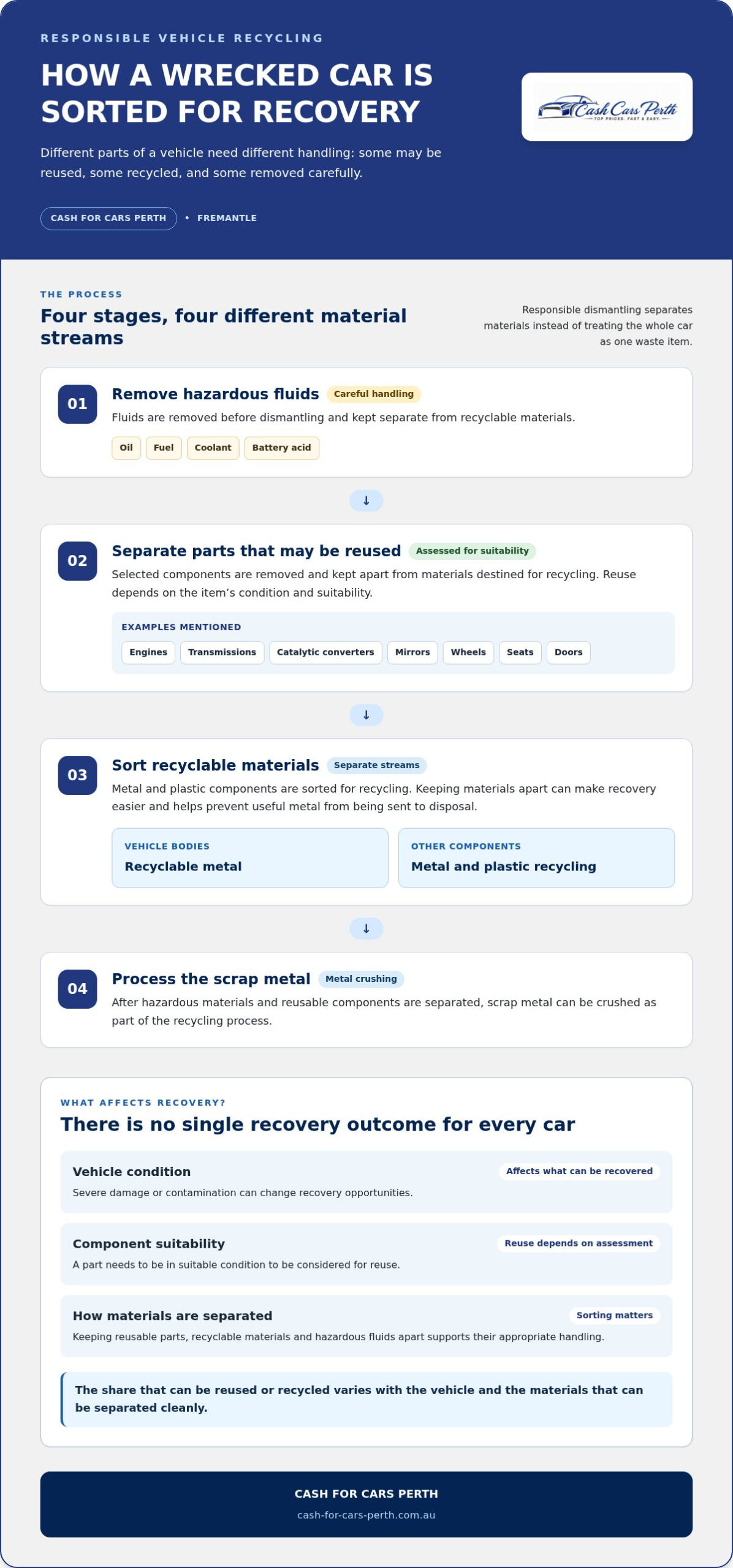
Responsible vehicle recycling separates reusable components, recyclable materials and fluids that need careful handling. Each stream requires a different step before an unwanted vehicle is processed.
Cash For Cars Perth provides free vehicle removal in Fremantle and handles vehicles in any condition. Environmentally friendly car wrecking in Fremantle involves separating reusable parts, recycling metal and plastic, and removing hazardous materials for responsible handling. The proportion that can be reused or recycled varies with the vehicle’s condition, component suitability and how materials are separated.
Environmentally Responsible Vehicle Dismantling
Responsible dismantling separates components and materials rather than treating the whole car as one waste item. Hazardous materials are removed, reusable components are put aside, and metals and plastics are sorted for recycling. Cash For Cars Perth recycles scrap vehicles, with hazardous-material removal and metal crushing as part of the process. These steps offer a practical way to understand how a vehicle is handled after pickup.
To identify environmentally friendly car wrecking in Fremantle, look for a clear explanation of how hazardous materials are removed and how reusable parts and recyclable materials are separated. The process matters more than a broad environmental claim.
Recycling Metals and Reusable Components
Vehicle bodies contain recyclable metal, while suitable components can be separated for potential reuse. Engines, transmissions and catalytic converters are examples of items wreckers may salvage. Metal and plastic components can then enter recycling streams instead of general vehicle waste. The outcome depends on each item’s condition and whether it can be separated cleanly.
Reducing Metal Waste in Landfill
Recovering metal from an unwanted vehicle reduces the amount of material sent to landfill. Dismantlers separate recyclable metal from components that need another form of handling. Reusable parts are kept apart, while metal is collected for recycling. This sorting matters because mixing materials can make recovery harder and send useful metal to disposal instead.
There is no single recovery percentage for every wrecked car. A vehicle with usable components and separable metal offers different recovery opportunities from one with severe damage or contamination. Ask how reusable parts, metal and plastics are separated. Those steps explain what may be recovered without assuming every vehicle yields the same result.
Handling Hazardous Fluids Safely
Oil, fuel and coolant can harm the environment if handled improperly. Battery acid also requires careful handling. A responsible process removes these fluids before dismantling, keeps them separate from recyclable materials, and directs them to appropriate disposal. This helps prevent leaks from contaminating metal, plastic or the ground around the vehicle.
Before arranging pickup, share any known fluid leaks or damage with the removal team. A leaking fuel system or damaged battery gives the team useful information for safe handling. Avoid draining fluids yourself. Leave that step to the dismantling process, where fluids can be collected separately from parts and scrap metal.
For a vehicle ready for disposal, scrap vehicle removal is a practical next step. Choose a process that separates reusable components, metals, plastics and hazardous fluids rather than sending everything into one waste stream.
Cash offers for unwanted cars
A cash offer for an unwanted car reflects its potential value after removal. For a Fremantle vehicle, Cash For Cars Perth assesses details such as make, model, year and condition, along with usable parts, recyclable materials and scrap metal. A vehicle with sought-after components may be assessed differently from one with extensive damage.
Give accurate details when requesting an assessment. Note the vehicle’s make, model and year, then describe its condition clearly. For example, say whether the engine runs, whether panels are damaged, and whether major components are missing. Clear information helps the team assess the vehicle’s parts, materials and removal requirements.
Factors affecting cash offers
Several factors shape an offer, and each affects a vehicle’s potential reuse or scrap value. Make and model help identify the parts involved. Year and condition provide context for assessing them. Parts demand and the reusability of key components also matter. Metal weight and recyclable materials contribute to the vehicle’s scrap value.
- Vehicle details: Provide the make, model and year.
- Condition: Describe damage, missing components and whether it runs.
- Reusable parts: Identify major components that remain intact.
- Removal needs: Explain where the vehicle is and whether access is clear.
These details help explain how an offer is assessed. An intact transmission or engine may affect the assessment differently from damaged components. A heavier vehicle may contribute more scrap metal, while demand for parts affects potential reuse. No single factor tells the whole story; the assessment considers the vehicle as a whole.
Cash For Cars Perth offers a free quote by phone, online or on-site. Share consistent information, including visible damage and missing parts. If the vehicle has been in a crash, describe which areas were affected. Clear details help the assessment reflect its actual condition rather than assumptions.
Cash For Cars Perth provides free vehicle appraisal, removal and paperwork, with no obligation to accept an offer. Ask how and when payment is made; the service offers same-day payment and pickup. Keep the agreed vehicle details and offer clear so both sides understand the arrangement.
Owners can prepare by gathering registration details if available and taking clear photographs of damage or missing parts. Photos of the vehicle’s exterior, interior and engine area can help communicate its condition. Accurate details make the quote process more straightforward and help ensure the assessment reflects the car being collected.
Service coverage around Perth and Fremantle
Collection planning starts with the vehicle’s exact location and condition. Around Fremantle and Perth, clear access details help an auto wrecker plan towing and removal.
Service Coverage Around Fremantle
Fremantle is within Cash For Cars Perth’s service area. Provide the street address, suburb and a practical description of where the vehicle is parked. A car on a shared driveway, behind a gate or in a tight parking area may need different access planning.
Give the vehicle’s condition alongside its location. For example, mention if it is damaged, cannot roll, or is parked in a basement. These details help the removal team understand access before arranging collection. Share any timing or access constraints when agreeing on the pickup arrangements.
Wrecking Services in South Fremantle
For a South Fremantle collection, include the full address and any access instructions when describing the vehicle. Note whether it is on a residential street, private property or a shared accessway. This helps distinguish its location from nearby streets with similar names.
Also describe obstacles that could affect towing, such as a narrow driveway or another vehicle blocking the exit. If the car is accident-damaged or unable to move, state that clearly. Accurate details support a practical collection plan and help avoid delays caused by unclear access information.
Coverage Across Perth
Cash For Cars Perth’s service area extends beyond Fremantle. Vehicle removal is available in Perth, Rockingham, Mandurah and Joondalup, among other named locations. These areas sit in different directions from central Perth, so give the suburb and full pickup address rather than a broad description such as “near Perth”.
When arranging removal, share these details:
- Exact location: suburb, street and where the vehicle is parked.
- Vehicle access: driveway width, gates, parking restrictions or shared entries.
- Vehicle condition: whether it runs, rolls or has accident damage.
- Contact arrangements: who can provide access at the property.
These steps help organise collection across a service area that includes Fremantle and other Perth-region locations. The business’s coverage is focused on Perth and surrounding areas, including the named locations above. A nearby suburb should be described accurately, rather than assumed from its distance to Fremantle. This gives the removal team the information needed to plan towing and discuss the next step without confusion.
Wrecking cars in various conditions
A car doesn’t need to be roadworthy to have a possible wrecking route in Australia. Fremantle owners can describe its condition accurately and arrange an assessment based on damage, missing components and access. Cash For Cars Perth accepts unwanted, accident-damaged, unregistered, rusty, broken-down and written-off vehicles. The useful first step is a clear description, not an assumption that the vehicle is worthless.
Describe the vehicle’s condition clearly
Start with what you can observe. State whether the engine starts, whether the car moves, and which panels or windows are damaged. If it’s unregistered, rusty or written off, say so directly. These details help distinguish an accident-damaged vehicle with intact components from one exposed to weather or stripped of parts.
Be specific about what remains. For example, mention a missing wheel, a damaged front end or an intact cabin. Don’t describe a vehicle as complete if major components have been removed. Accurate information helps the assessment reflect its actual condition and gives the removal team a clearer picture of collection needs.
Match removal planning to the condition
Condition also affects collection planning. A broken-down car may not move under its own power, while an accident-damaged vehicle could have bent panels or a blocked wheel. Tell the removal team if the vehicle is in a garage, behind a gate or on a narrow driveway. These practical details help plan towing and access without relying on the car being drivable.
For a written-off vehicle, describe visible damage rather than trying to assess its mechanical state yourself. A photograph of each side and any major impact area can help explain the situation. Include whether the car is complete, as missing parts can affect what can be recovered during dismantling.
Prepare for a condition-based assessment
Before requesting car removal, gather the make, model and year, then note the vehicle’s condition and location. Add clear photos if available. This gives the team useful details for assessing an unwanted vehicle and planning pickup. Keep registration documents if you have them, and gather ownership information for the handover.
- Accident damage: identify the affected area and whether the car still rolls.
- Rust: describe where it appears, such as doors, panels or the underbody.
- Breakdown: explain whether the engine starts or the vehicle can move.
- Missing parts: list removed wheels, doors or other visible components.
These steps make the next move more straightforward. A vehicle’s condition informs its assessment and removal plan, but it doesn’t automatically rule out wrecking. Share facts, not guesses. That’s the clearest way to move an unwanted car towards responsible disposal.
Arrange removal for a damaged vehicle
Cash For Cars Perth: Scrap Car Removal
Cash For Cars Perth can help when an unwanted vehicle needs removal rather than repair or continued use. Its Scrap Car Removal service provides a practical next step for cars ready for disposal, including accident-damaged vehicles. Cash for Unwanted Cars offers owners a cash offer, while Accident Car Removals and Truck Removal Perth address those specific vehicle needs.
To get started, share the vehicle’s make, model, year, condition and Fremantle pickup location. Clear details help the team understand the vehicle and plan the next step. Contact Cash For Cars Perth to discuss removal for your vehicle.
Choose a clear next step for your vehicle
Make the next move simple: decide whether your vehicle is ready for removal, then share accurate details about its condition and location. Environmentally friendly car wrecking in Fremantle gives an unwanted vehicle a responsible route beyond being left unused. Cash For Cars Perth offers free removal and same-day payment, with the assessment based on the vehicle’s details.
Cash For Cars Perth offers Scrap Car Removal, Cash for Unwanted Cars and Accident Car Removals. These services can suit owners dealing with an unwanted vehicle, including one damaged in an accident. Vehicle details help shape the next steps, and its individual condition informs the assessment.
Gather the make, model, year and any useful ownership documents before making contact. Clear information helps start a straightforward conversation about free removal and a cash offer.
Take the next step by requesting a free quote and moving your unwanted vehicle towards a fresh start.
Frequently Asked Questions
How Do Car Wreckers Work?
Car wreckers assess a vehicle, arrange its collection, then separate components for reuse or recycling. The process usually starts with details such as make, model, year and condition. After collection, suitable parts may be removed, recyclable materials sorted, and hazardous materials handled separately. For example, an engine may be assessed for reuse while the vehicle’s metal is directed towards recycling.
How It Works?
Start by sharing the vehicle’s details and Fremantle location to request a free quote. Describe any damage, missing parts or access issues, such as a locked gate or a car in a tight driveway. Once the offer and collection arrangements are agreed, prepare the vehicle for handover. Remove personal belongings and keep any documents you’ll need for the ownership transfer.
What environmental certifications or licences should a car wrecker in Western Australia have?
Look for a clear explanation of responsible handling, rather than relying on a badge alone. A wrecker should be able to explain how it separates reusable components, recycles metal and plastic, and handles vehicle fluids. Industry organisations such as the Australian Automotive Aftermarket Association and The Vehicle Wrecking Association promote responsible recycling. Their names can help you understand the sector, but assess the actual process too.
How do eco-friendly car wreckers dispose of oil, coolant, batteries, and other hazardous materials?
Responsible wrecking separates hazardous materials from reusable parts and recyclable vehicle materials. Oil, fuel and coolant are removed and handled apart from scrap metal, while batteries need careful handling because battery acid can harm the environment. These materials shouldn’t be tipped onto the ground or mixed with general waste. Proper separation helps prevent leaks from contaminating parts, soil or other materials during dismantling.
How much do environmentally friendly car wreckers pay for scrap cars in Fremantle?
There’s no single cash amount for every scrap car in Fremantle. An offer depends on the vehicle’s make, model, year and condition, plus metal weight, demand for parts and whether key components can be reused. To get an assessment, provide accurate details and photos of damage or missing parts. The offer is based on the vehicle’s specifics after a quote request.
How can I compare Fremantle car wreckers on recycling practices, price, and customer reviews?
Compare quotes using the same vehicle details, including condition, missing parts and pickup location. Look for an explanation of how each wrecker separates reusable components, metals, plastics and fluids. Read reviews for specific comments about communication, collection and whether agreed arrangements were followed. Compare what each quote covers, not just the amount, so you can weigh the offer alongside the recycling process.
What should I do before a car wrecker collects my vehicle?
Remove personal items from the cabin, boot and glovebox, including documents, garage remotes and belongings tucked beneath seats. Take off toll tags or parking permits, and photograph the vehicle’s condition before collection. Clear a path to the car and mention gates, narrow access or other obstacles when arranging pickup. Gather photo identification and registration papers if available for the handover.
What are the risks of using an unlicensed or environmentally irresponsible car wrecker in Fremantle?
Poor dismantling practices can leave oil, fuel, coolant or battery acid to leak into the surrounding area. Reusable components and recyclable metal may also be discarded instead of separated, increasing avoidable waste. Unclear handover paperwork can create confusion about the vehicle’s transfer. Before agreeing to collection, look for a clear explanation of material handling and a straightforward record of the vehicle handover.
0 Comments