
 2/40 Royal Street Kenwick WA 6107
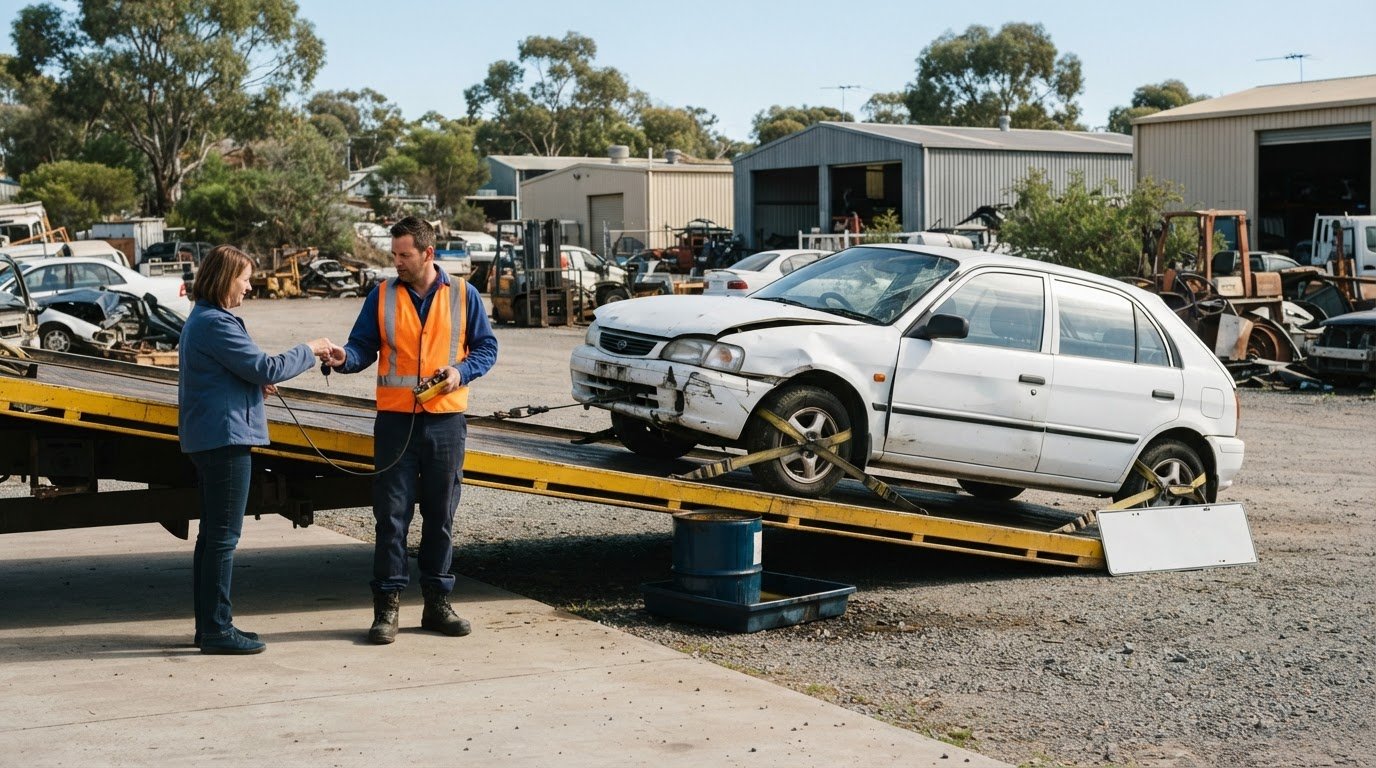
You can scrap a car in WA that isn’t in your name only if you have the right to dispose of it and can prove ownership. Knowing what happens to my car after scrapping in WA starts with that ownership check. After disposal, the vehicle disposer must notify the Department of Transport within 7 days, and cancelling the registration means surrendering the number plates.
It’s understandable to want clear answers before handing over a vehicle, especially if it’s damaged, unregistered or belongs to someone else. The paperwork matters, but it also helps to know what happens to the car after collection and how its condition affects its value.
This guide explains who can arrange scrapping, what ownership checks may involve, and how vehicles are dismantled and recycled. You’ll also learn which registration steps to handle after disposal, so you can plan the handover with confidence.
Key Takeaways
- You can arrange to scrap a car that isn’t in your name only if you have the right to dispose of it and can prove ownership.
- After disposal, notify the WA Department of Transport within 7 days and surrender the number plates when cancelling registration.
- Ownership checks can involve matching your documents and identification with the vehicle’s VIN or registration details.
- A scrap car’s condition influences whether a wrecker offers payment or charges for towing it away.
- Find out how the vehicle is assessed, dismantled and recycled, and keep a record of the handover and agreed terms.
Notifying the WA Department of Transport after disposal
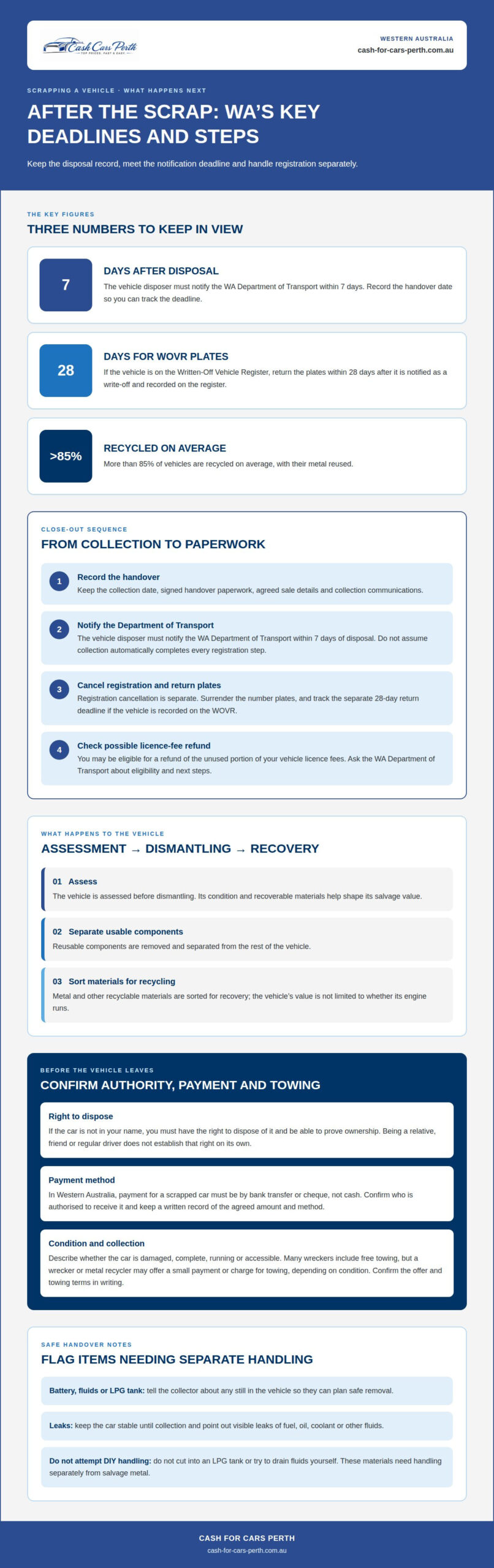
Once your car is disposed of in Western Australia, the vehicle disposer must notify the Department of Transport within 7 days. This deadline applies after disposal, so record the handover date and keep a copy of the sale or collection paperwork. That record helps you track when the notification is due and follow up if needed.
Registration is a separate task. When cancelling the vehicle’s registration, surrender its number plates. Don’t assume the scrap yard’s collection automatically cancels the registration or returns the plates for you. Confirm who will handle each step, then make sure the plates are returned as required. If the car is recorded on the Written-Off Vehicle Register (WOVR), the plates must be returned within 28 days after it’s notified as a write-off and recorded on the register.
You may also be eligible for a refund of the unused portion of your vehicle licence fees. When cancelling registration, ask the WA Department of Transport about eligibility and the steps to follow. Keep your registration details and disposal record handy.
Before car removal, identify any battery, fluids or LPG tank still in the vehicle. These need separate handling from salvage metal. Don’t cut into an LPG tank or try to drain fluids yourself. Tell the collector about these items at handover so they can plan safe removal and keep potentially hazardous materials out of general scrap.
Fuel, oil, coolant and other vehicle fluids can leak during transport or dismantling. Keep the car stable until collection and point out any visible leaks. Batteries and LPG tanks also need careful handling. Separating these materials from metal and other recyclable components helps prevent contamination and supports responsible disposal.
After collection, a salvage process may include assessing the vehicle, dismantling usable components and recycling remaining materials. Keep the signed handover paperwork, the agreed sale details and any communication about collection. These records help you confirm the disposal date for the 7-day notification deadline and resolve questions about the vehicle after it leaves your possession.
Use a simple close-out list: record the collection date, notify the Department of Transport within 7 days, cancel registration and surrender the plates, then retain your paperwork. If the vehicle is on the WOVR, track the separate 28-day plate-return deadline from its write-off notification and recording.
Can I scrap a car not in my name in Western Australia?
You can arrange to scrap a vehicle that isn’t registered in your name only if you have the right to dispose of it and can prove ownership. Being a relative, friend or regular driver doesn’t establish that right on its own. Confirm your authority before arranging collection, so the handover and payment details match the person entitled to dispose of the vehicle.
Registration status and disposal rights are separate issues. A car with expired registration can still be sold in Western Australia, but the seller needs to provide a receipt, and the buyer must arrange a permit or towing. A damaged or non-running vehicle can also be considered for salvage. Its condition affects the offer and whether collection involves a towing charge.
Agree on the payment method before handover. In Western Australia, payment for a scrapped car must be made by bank transfer or cheque, not cash. Confirm who will receive payment and that they’re authorised to dispose of the vehicle. Keep a written record of the agreed amount, payment method and collection arrangements.
Towing terms matter too. Many wreckers include free towing, while a wrecker or metal recycler may offer a small payment or charge to tow the vehicle away, depending on its condition. A car with recoverable salvage value may be treated differently from one that is badly damaged or difficult to collect. Ask for the offer and towing arrangement in writing before agreeing to the handover.
- Confirm authority: establish who has the right to dispose of the car and who will sign the handover.
- Describe its condition: explain whether it’s damaged, complete, running or accessible for collection.
- Settle payment terms: record the agreed payment, bank transfer or cheque method, and recipient.
- Clarify towing: note whether collection is included or a towing charge applies.
Don’t treat an initial offer as the final agreement until the collection details are clear. For example, explain in advance if the car is at a property with restricted access. Confirm the final offer and collection arrangements, then keep the quote, communications and disposal record together. These records can help if questions arise about payment or who authorised the vehicle’s removal.
Can I sell my car to wreckers?
Yes, you can sell an unrepairable car to a wrecker for scrapping and recycling. Choose a registered car scrapping business, then arrange collection rather than driving a vehicle that shouldn’t be on the road.
Dismantling and Recycling Scrap Cars
Dismantling and recycling involves collecting and assessing a vehicle, removing reusable components, then sorting the remaining materials for recycling. For an unrepairable car in WA, value isn’t limited to whether the engine runs. The vehicle’s condition and recoverable materials shape what happens after collection.
At a scrap yard, the vehicle is assessed before dismantling begins. Usable components are separated, then metal and other recyclable materials are sorted for recovery. More than 85% of vehicles are recycled on average, with their metal reused. This process gives damaged cars a route into material recovery instead of leaving the whole vehicle unused.
Choosing a Licensed Wrecker or Recycler
For a responsible disposal, understand what happens after collection: the vehicle is assessed, dismantled and sorted for recycling. Cash For Cars Perth provides free removal and paperwork completion, and recycles scrap vehicles by removing hazardous materials and crushing metal.
Before agreeing, describe the car’s condition accurately, including whether it’s unrepairable or no longer running. Confirm the collection arrangement and how the vehicle will be handled. A clear explanation of the process helps distinguish a complete recycling service from a simple vehicle removal.
Recycling also affects the environmental outcome. Recovering metal and other materials reduces the amount of a scrapped vehicle sent to waste. Recycling aluminium uses 95% less energy than recycling steel. That comparison shows why separating materials during dismantling matters, rather than treating the car as one block of scrap.
Tyres need their own recovery pathway. About 220 million used tyres are produced, and 80% are recycled. Reuse and recycling keep tyres in the materials cycle instead of sending every discarded tyre to landfill. Ask how the yard handles tyres as part of its vehicle recycling process, alongside the engine and metal components.
Collection is the start of the recycling process. The vehicle is taken for assessment, where recoverable components and materials are identified. Even with an unusable engine, a car may contain recyclable metal, while tyres and other materials can be sorted separately. This is how scrap car removal leads to recovery and reuse.
Knowing how an unrepairable car will be handled can make the disposal process clearer. Cash For Cars Perth removes scrap vehicles and recycles them, with hazardous materials removed and metal crushed. Keep your handover record with the vehicle details for your own records.
Factors affecting scrap car value in Western Australia
A scrap vehicle’s value in Western Australia depends on what can be recovered and the work needed to collect it. An auto wrecker or metal recycler may offer a small fee or charge to tow it away, depending on its condition. The same car model can therefore lead to different offers if one is complete and accessible, while another is heavily damaged or difficult to move.
Start with the vehicle’s condition. A damaged car may still have reusable components or recyclable materials, even if it no longer runs. Missing components can affect what is recoverable. Describe the damage clearly when requesting an assessment, including whether the engine starts and whether the car is accessible for collection.
Recoverable components and materials also matter. Vehicles are assessed for reusable parts and materials for recycling. Components that can be reused contribute to the vehicle’s salvage potential, as does metal recovery. An unrepairable car isn’t automatically valueless: its remaining components and materials still matter.
Collection arrangements can change the overall offer. A vehicle that’s easy to reach and load presents a different removal task from one trapped behind other vehicles or located where a tow truck can’t approach. Explain access conditions before accepting an offer. If towing is needed, the car’s condition may affect whether the buyer offers payment or charges for removal.
- Completeness: note missing components, including whether the engine is present.
- Damage: describe accident damage and whether the vehicle can roll or steer.
- Access: explain where the car is parked and any collection obstacles.
- Salvage: identify what remains available for dismantling and recycling.
Registration and scrap value are separate matters. A car that’s no longer registered can still contain salvageable materials, while registration doesn’t determine the condition of those materials. Handle any required notification or registration steps with the WA Department of Transport separately from agreeing on the vehicle’s value.
To compare offers fairly, give each buyer the same description of the car and collection conditions. Include its make and model, known damage, missing components, engine status and location. Then compare the stated payment with any towing charge, rather than focusing only on a headline figure. Record the final agreement before the vehicle is collected.
Your right to dispose of the vehicle is separate from its physical value. Confirm your authority to hand it over and keep the sale or collection record. This makes the transaction clear while the vehicle is assessed for salvage. In Australia, condition, recoverable materials and collection requirements all affect a scrap vehicle’s value.
Identity and ownership checks when scrapping a car
A wrecker needs to establish that the person handing over an unwanted vehicle has the right to dispose of it. Be ready to show documents linking you to the car, as well as identification. Buyers may compare the seller’s documents with the vehicle identification number (VIN) or registration number to check that the vehicle matches the disposal paperwork.
The VIN is a unique 17-character code used to verify a vehicle’s history and ownership status. Locate it on the car before collection, then check that the number matches the paperwork. If the registration papers are missing, a statutory declaration confirming ownership may help. Some buyers may request extra verification, so have any records that support your right to dispose of the vehicle available.
Photo identification is also part of the handover. A buyer usually records the seller’s identification by scanning or photographing it. If you don’t have a valid driver’s licence, a passport together with a current utility bill can be used. The bill helps confirm your address. The person collecting the vehicle may need to see identification and sign the handover, even if you aren’t there.
If you won’t be present for collection, arrange the paperwork with the buyer beforehand. Someone must be available to show identification and sign the handover, unless you’ve arranged a pre-signed document. Tell the person on site which documents to show and where the signed form should go. This connects the collection record to the vehicle and authorised seller.
Some ownership situations need extra documents:
- Company vehicle: prepare company identification, an authorisation letter on company letterhead and ABN details.
- Inherited vehicle: documents may include the death certificate, probate documents and a statutory declaration confirming your right to dispose of it.
- Lost registration papers: a statutory declaration confirming ownership may support the handover.
A PPSR enquiry about a Western Australian vehicle’s Written-Off Vehicle Register status requires its VIN or chassis number. You can’t search using the number plate or engine number. The PPSR can be called on 1300 007 777 to check whether a vehicle is recorded on the WOVR, reported stolen or has money owing. Keep the enquiry details with your disposal documentation.
Scrap metal buyers record transactions under the Scrap Metal Dealers Act. Before signing, read the handover record and check that it identifies the vehicle and agreed disposal. Keep a copy with your payment and collection records. The signed documentation provides a clear record if questions arise about the car or who authorised its removal.
Cash For Cars Perth: Scrap Car Removal
Cash For Cars Perth handles scrap car removal for unwanted, damaged and non-running vehicles. Its services include accident car removals and truck removal, helping owners arrange disposal for different vehicle types.
Share the vehicle’s condition and have your ownership documents ready before arranging the handover. After disposal, complete any required WA Department of Transport and registration steps, including notifying the department within the applicable timeframe. Keeping your handover record makes those follow-up tasks easier to manage.
For an unwanted or damaged vehicle, contact Cash For Cars Perth to discuss removal.
Make your next step a clear one
Knowing what happens to your car after scrapping in WA can help you approach disposal with a clearer plan. Before arranging the handover, decide what you need from the process: removal of an unwanted vehicle, disposal after an accident, or help moving an unrepairable car on. Cash For Cars Perth offers scrap car removal, cash for unwanted cars and accident car removals, giving you a practical next step for these situations.
Have your vehicle details and ownership documents ready when you get in touch. A clear description of the car and its condition helps start the conversation and clarify the handover arrangements. Cash For Cars Perth offers a free quote, with no obligation to accept.
Take it one step at a time. With the right paperwork ready, you can arrange a straightforward vehicle handover and free removal.
Frequently Asked Questions
Car Wreckers: Everything You Need to Know in Perth, WA?
Car wreckers assess unwanted vehicles for salvage and arrange their removal for dismantling or recycling. In Perth, this can suit cars that are damaged, unregistered or no longer running. Cash For Cars Perth buys and removes vehicles, rather than retailing individual car parts. Have the vehicle details ready and confirm who can authorise its disposal.
Do I need to be present when the tow truck arrives?
You don’t always need to be there, but someone must show identification and sign the handover unless you’ve arranged a pre-signed document with the buyer. If you’re at work, organise the paperwork before collection and tell the person meeting the tow truck what to present. Keep a copy of the signed handover record for your records.
Do I need to clean my car before scrapping it in Perth?
You don’t need to give an unwanted car a detailed clean before collection. Do remove your personal belongings, including items in the glovebox, boot and door pockets. Check for documents, house keys, toll tags and removable electronics. If you can’t open a compartment or the car is badly damaged, tell the collector where personal items may remain rather than forcing access.
Do You Need a Rego to Scrap a Car in WA?
No, a vehicle can be sold for scrap without current registration. Cash For Cars Perth accepts unregistered vehicles, so expired rego doesn’t automatically prevent disposal. Tell the buyer the car’s status when arranging collection, and don’t drive an unregistered vehicle to a yard. If it still has WA registration, handle cancellation and plate return separately after disposal.
How much do wreckers pay for cars in WA?
There isn’t one fixed amount for every scrap car. A buyer assesses the vehicle’s condition, completeness, recoverable materials and collection requirements before giving an offer. A damaged car with usable components may be assessed differently from a stripped vehicle that requires difficult towing. For a clear comparison, give each buyer the same details and consider the payment alongside the collection terms before accepting.
I Just Want to Get Rid of My Car, What Are My Options?
You can arrange scrap removal through a vehicle buyer or wrecker, or sell the car privately if it’s suitable for private sale. For a damaged or non-running vehicle, removal means you don’t have to drive it. If selling privately, prepare proof of ownership and provide a receipt or sale contract. If registration won’t transfer, remove the plates and follow the WA process to cancel it.
What happens to a car after it is scrapped in Western Australia?
After collection, the vehicle is assessed for components and materials that can be recovered. Reusable components are separated, while metals and other materials are sorted for recycling. A car that can’t be repaired may still provide useful salvage. Knowing what happens to a car after scrapping in WA also means keeping your handover records and completing any remaining registration tasks.
How is a scrap car dismantled and recycled in WA?
A scrap car is collected, assessed and dismantled so recoverable components can be separated from the vehicle shell. Remaining materials are sorted for recycling, while tyres and other materials can follow separate recovery pathways. Cash For Cars Perth recycles scrap vehicles by removing hazardous materials and crushing metal. Describe any damage, missing components or visible leaks before collection to help the team plan how to handle the vehicle.
0 Comments