
 2/40 Royal Street Kenwick WA 6107
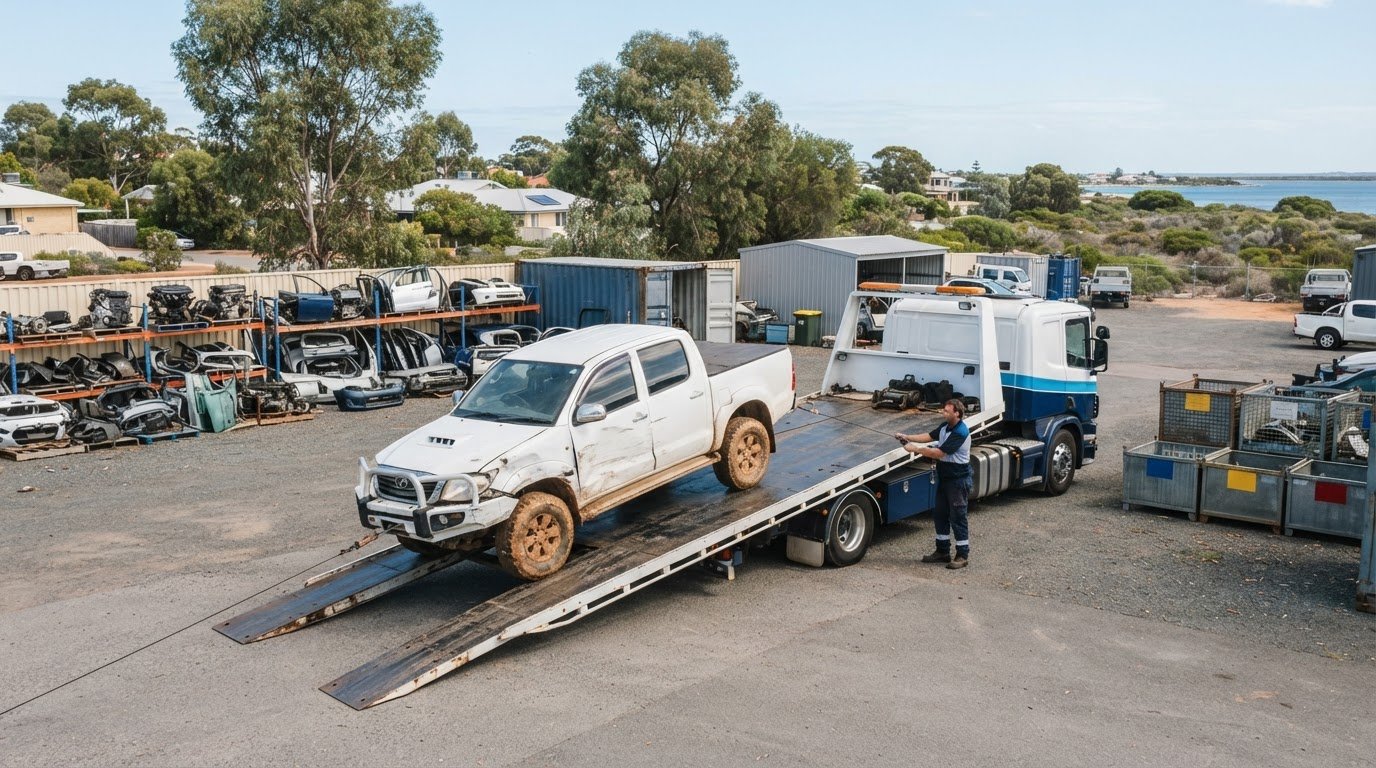
A damaged 4WD can still be worth more than scrap metal alone. With 4×4 wreckers in Mandurah, the process generally starts with details about the vehicle and its condition, which help determine a cash offer. If you accept, the vehicle can be removed for salvage, dismantling or recycling, depending on what can be recovered.
Selling a 4WD privately or stripping it for parts can take time, especially if it’s damaged, unregistered or no longer running. Wrecking offers a more direct option, but the vehicle’s make, model, condition and reusable components all affect its value. This guide explains how cash offers are assessed, what happens during wrecking and salvage, and how recycling fits in. You’ll also learn what to consider before selling parts yourself, what details to prepare for a quote, and which surrounding areas are covered. That way, you can understand the steps and choose a practical way to move on from an unwanted 4WD.
Key Takeaways
- A 4WD’s condition, reusable components and local demand all influence its value. Learn what details to gather before seeking an offer.
- Selling parts yourself can take extra time and effort. Compare that route with selling the whole vehicle for removal.
- Find out which nearby areas are covered and what to consider when arranging vehicle removal around Mandurah.
- See how wrecking separates salvageable components from material that can be recycled.
- Understand the steps involved in getting a cash offer for an unwanted, damaged or end-of-life 4WD.
Why Not Earn Selling the Parts to Auto Wreckers?
Selling usable components separately may bring a return, but it also means identifying, removing and storing each item. Compare that effort with selling the complete vehicle, especially if it’s damaged or difficult to dismantle.
Vehicle valuation factors
A vehicle’s condition, reusable components and local demand all shape its value. A running 4WD with intact panels may interest buyers differently from one with collision damage, missing components or a seized engine. Make, model, age and visible condition help describe what’s being assessed. Mandurah has postcode 6210 and is described as Western Australia’s second-fastest-growing city, so demand for particular vehicles and components can vary locally.
Testing and warranty for used parts
Testing helps establish whether a used component works, but the method depends on the part. An alternator is assessed differently from a gearbox or electronic control unit. Before buying, compare the part’s condition, testing information and any written warranty terms. Check what the warranty covers, how long it applies and what proof of purchase is required. These details matter if a component fails after installation.
Used and reconditioned parts
Used spare parts are removed from existing vehicles and may show wear, while reconditioned parts have undergone repair or refurbishment. Aftermarket parts and off-road accessories, such as bull bars, roof racks or suspension components, may have value when their condition and fitment are clear. Keep brand names, part numbers and receipts. Photograph accessories while fitted, then record any damage or missing fittings before discussing a separate sale.
Comparing prices and reviews
Compare written offers against the same vehicle details: make, model, year, condition, missing parts and accessories. Reviews can help reveal patterns in communication, collection arrangements and payment experiences, but look for specific examples rather than star ratings alone. A local car wreckers overview can help you understand whole-vehicle wrecking alongside parts recovery.
To get a 4WD wrecking quote, prepare its make, model, year, location and registration status. Describe whether it runs, any accident damage, missing components and included off-road accessories. Clear photos of the vehicle and damage can help explain its condition.
After selling or scrapping a 4WD in WA, notify the relevant vehicle registration authority and follow its current cancellation process. Keep the sale or disposal paperwork with your records, including the vehicle details and transfer information.
Service areas around Mandurah
Collection planning starts with the vehicle’s exact location, not just the suburb name. Mandurah is in Western Australia and has postcode 6210, but a pickup address can be in town, a nearby residential area or a more remote property. Give the suburb, street access details and any restrictions so the collection can be planned around the vehicle’s position.
Mandurah sits within a wider service network across Perth and the south-west. Relevant locations include Rockingham, Fremantle and Joondalup. These place names help show the regional scope, but they aren’t interchangeable: a vehicle in Rockingham has a different pickup location from one in Mandurah. Give the actual suburb rather than relying on a broad description such as “near Perth”.
What to include for your pickup location
Share the vehicle’s address and describe how a removal vehicle can reach it. Mention a narrow driveway, gated entrance, shared car park or limited turning space. If the 4WD is at a workshop, rural block or roadside location, identify the site clearly. These details help distinguish a straightforward driveway collection from one that needs a different access plan.
For a vehicle in Mandurah, include its suburb and postcode, 6210, with the street address. If it’s outside Mandurah, name the nearby town, such as Rockingham. Check that the address matches where the vehicle is actually parked. A different storage site or workshop address can affect pickup planning, even when the registered owner lives elsewhere.
Preparing for collection across the region
Before arranging a pickup, gather the vehicle’s location, condition and access information in one place. Then confirm any practical details that could affect arrival, such as whether the vehicle is inside a locked yard or behind another car. For example, a non-running 4WD blocked in a car park presents different access needs from one parked beside a clear driveway.
- Provide the full pickup address and suburb.
- Describe driveway, gate and parking access.
- Say whether the 4WD can move under its own power.
- Identify any site contact if the vehicle is at a workshop.
These steps make regional arrangements clearer for owners selling a vehicle from Mandurah or nearby areas. They also help avoid confusion between the owner’s home and the vehicle’s location. Across Australia, clear address details are a practical starting point for arranging vehicle removal. State the suburb, explain access and note any obstacle before settling collection details.
Car wrecking and salvage
Wrecking separates a vehicle’s reusable components from material suited to recycling. The process starts with identifying the 4WD, assessing its condition and arranging removal.
Wrecking and salvage services
Salvage assessment considers whether the vehicle can be dismantled for reusable components or is mainly suitable for material recovery. A damaged 4WD may still contain usable doors, wheels or drivetrain components, while severe damage can limit what is recoverable. The vehicle’s condition and the demand for its components help guide this assessment.
After removal, the vehicle can be inspected and dismantled. Components with potential for reuse are separated from materials for recycling. Estimates put 12 to 15 million vehicles every year at the end of their useful life in places including Australia and the USA. For an owner, the practical point is to describe damage and missing components accurately before collection.
Accepted 4×4 makes and models
Make, model and year help identify a 4WD and its components. For example, a Toyota LandCruiser and a Nissan Patrol have distinct model details, so give the exact badge and variant shown on the vehicle or its paperwork. Don’t assume a particular model’s age or condition tells the whole story.
Wreckers assess each vehicle based on its details, not just its brand. Say whether it starts or moves, and describe any accident damage or removed components. A clear description distinguishes a complete vehicle from one missing wheels, panels or its engine. Photos can make those details easier to explain.
Before arranging removal, collect the vehicle’s identification details and note its current condition. Record what remains fitted, including factory components and off-road accessories. If the 4WD has been in a collision, describe the affected area and any visible damage. This gives the assessor a clearer picture than a broad description such as “old” or “not running”.
Wrecking can suit a vehicle that’s no longer practical to drive or sell privately. It also provides an end route for damaged vehicles whose components may still have salvage value. Ask how the assessment accounts for the complete vehicle, reusable components and recycling, then compare that explanation with the vehicle’s actual condition.
- Share the exact make, model and year.
- Describe whether the 4WD starts or moves.
- List missing parts, damage and fitted accessories.
- Explain where the vehicle is located for removal.
These details help make the wrecking and salvage process clearer from assessment through removal. For owners searching for 4×4 wreckers in Mandurah, an accurate vehicle description is the best starting point.

Cash offers for unwanted cars
A cash offer gives you a direct way to assess an unwanted 4WD without selling each component separately. In Mandurah, a vehicle cash offer can arrive within 24 hours or sooner after you submit a quote form.
The offer reflects the vehicle as a whole. Its make, model, age, condition, damage and reusable components all help shape the assessment. A complete 4WD with a sought-after engine differs from one with major collision damage or missing parts. Local demand for that model and its components also influences its salvage value.
Give accurate information when requesting a quote. Describe whether the vehicle starts, identify visible damage and mention any removed components. If a bull bar, canopy or other off-road accessory is included, say so. These details help align the offer with the vehicle that will be collected. Clear photos can also show damage or missing parts more precisely than a short description.
The price depends on the vehicle’s case and is given after a quote request; condition, reusable components, damage and local demand influence the assessment. Compare the written offer with the details you supplied. If the vehicle’s condition changes, or you remove an accessory before collection, tell the buyer. A difference between the described vehicle and the vehicle presented can affect the assessment.
Before accepting, make sure you understand what the offer covers. Confirm whether it applies to the complete vehicle, including fitted accessories, and clarify the collection arrangements and payment process. Keep a copy of the agreed details. For example, if you’ve described a 4WD with its wheels and canopy, check that those items remain part of the agreement.
Use this simple sequence to keep the sale organised:
- Submit the quote form with the correct vehicle details.
- Review the offer against the vehicle’s actual condition.
- Agree on what stays with the vehicle, including accessories.
- Arrange collection and retain the sale documentation.
A convenient cash offer can suit owners who want to dispose of a damaged, unwanted or end-of-life vehicle without arranging separate buyers for its parts. Selling privately can involve listing the 4WD, responding to enquiries and coordinating viewings. A whole-vehicle offer keeps the decision focused on one vehicle and one agreed transaction.
For a Mandurah owner, the key takeaway is simple: submit precise information, review what the offer includes, then agree on collection details. That gives you a clearer basis for deciding whether a cash sale suits your 4WD.
What 4×4 makes and models do wreckers in Mandurah accept?
Wreckers assess 4WDs across makes and models, including vehicles that are damaged, unwanted or no longer running. The nameplate alone doesn’t decide whether a vehicle is suitable. Its condition, completeness and potential for salvage also shape the assessment.
Give the exact make, model and variant when describing your vehicle. For example, Toyota LandCruiser, Nissan Patrol, Ford Ranger and Mitsubishi Pajero identify different 4WDs, with model and year helping distinguish their components. Include the badge or variant where you can, rather than relying on a broad description such as “Toyota four-wheel drive”.
Condition can vary widely within the same model range. A running Nissan Patrol with intact panels is different from a collision-damaged Patrol missing its wheels. Wreckers can assess 4WDs in different conditions, including accident-damaged and non-running vehicles. Describe whether yours starts, moves, has major damage or is missing components.
Body style and configuration also help explain what you’re selling. A dual-cab ute, wagon and short-wheelbase 4WD have different layouts and fitted components. Mention the cab style, doors, engine type if known, and any modifications. A Toyota Hilux with a canopy or a Ford Ranger with a bull bar should be described with those accessories included.
Use these details to prepare an accurate vehicle description:
- Make, model, variant and year, if known.
- Whether the 4WD starts and can move.
- Accident damage, mechanical issues and missing parts.
- Fitted accessories, such as a canopy, bull bar or roof rack.
- The vehicle’s location and access conditions.
Photos can support the description. Capture the front, rear, sides, dashboard and any visible damage. For a modified 4WD, photograph accessories separately or show them clearly fitted. These examples help explain the vehicle’s actual state and reduce confusion between a complete model and one stripped for components.
Don’t assume an older model has no salvage value, or that a popular badge guarantees a particular offer. A complete vehicle and one missing key components may receive different assessments, even if they’re the same model. Accurate details let wreckers assess the vehicle as it stands, rather than judging it by its name alone.
For a Mandurah owner, the practical next step is to identify the 4WD clearly and describe its condition honestly. Include its model, damage, missing parts and accessories when seeking an assessment.
Cash For Cars Perth: Scrap Car Removal
Cash For Cars Perth offers Scrap Car Removal and Cash for Unwanted Cars for owners ready to move on from an unwanted vehicle. Turn to these services when your 4WD is damaged, no longer running or at the end of its useful life, and you want to arrange its removal rather than sell components separately.
Share the vehicle’s make, model, condition and location when requesting a quote. Mention accident damage or missing parts so the vehicle can be assessed accurately. Cash For Cars Perth also handles Accident Car Removals and Truck Removal Perth, which can suit other unwanted or damaged vehicles.
Contact Cash For Cars Perth or visit cash-for-cars-perth.com.au to discuss your vehicle.
Make your next move with confidence
Before committing, decide what matters most: a single arrangement for the whole vehicle, or the time and effort of pursuing separate parts sales. For 4×4 wreckers in Mandurah, a clear description of your vehicle helps make the next conversation more useful. Note its condition, what remains fitted and where it’s located, then consider which disposal option best suits your situation.
Cash For Cars Perth offers Scrap Car Removal, Cash for Unwanted Cars and Accident Car Removals. These options can help if you’re ready to move on from an unwanted or damaged vehicle. Review the details you’ve gathered and take the next step when you’re ready.
A practical decision starts with the facts about your 4WD. You’re now better placed to choose a path forward and make the process manageable.
Frequently Asked Questions
How does it work?
Start by sharing your 4WD’s make, model, year, condition and location. The buyer uses those details to prepare an offer, then you decide whether to proceed. If you accept, collection and payment are arranged. A vehicle can still be considered if it won’t start, has no keys or is missing parts. Before pickup, remove personal belongings and take any toll tags or parking permits from the vehicle.
What paperwork is required to sell or scrap a 4×4 in Western Australia?
Prepare any registration papers you have and information that identifies the vehicle, such as its registration details or vehicle identification number. Keep a written record of the sale, including the vehicle, buyer, date and agreed amount. If the 4WD is registered, complete the relevant WA transfer or cancellation steps and retain copies of paperwork. Cash For Cars Perth also provides paperwork completion as part of its vehicle removal service.
Are Mandurah 4×4 wreckers licensed and do they recycle vehicles responsibly?
The article does not provide licensing information. It says wreckers inspect and dismantle vehicles, separating reusable components from materials for recycling.
0 Comments