
 2/40 Royal Street Kenwick WA 6107
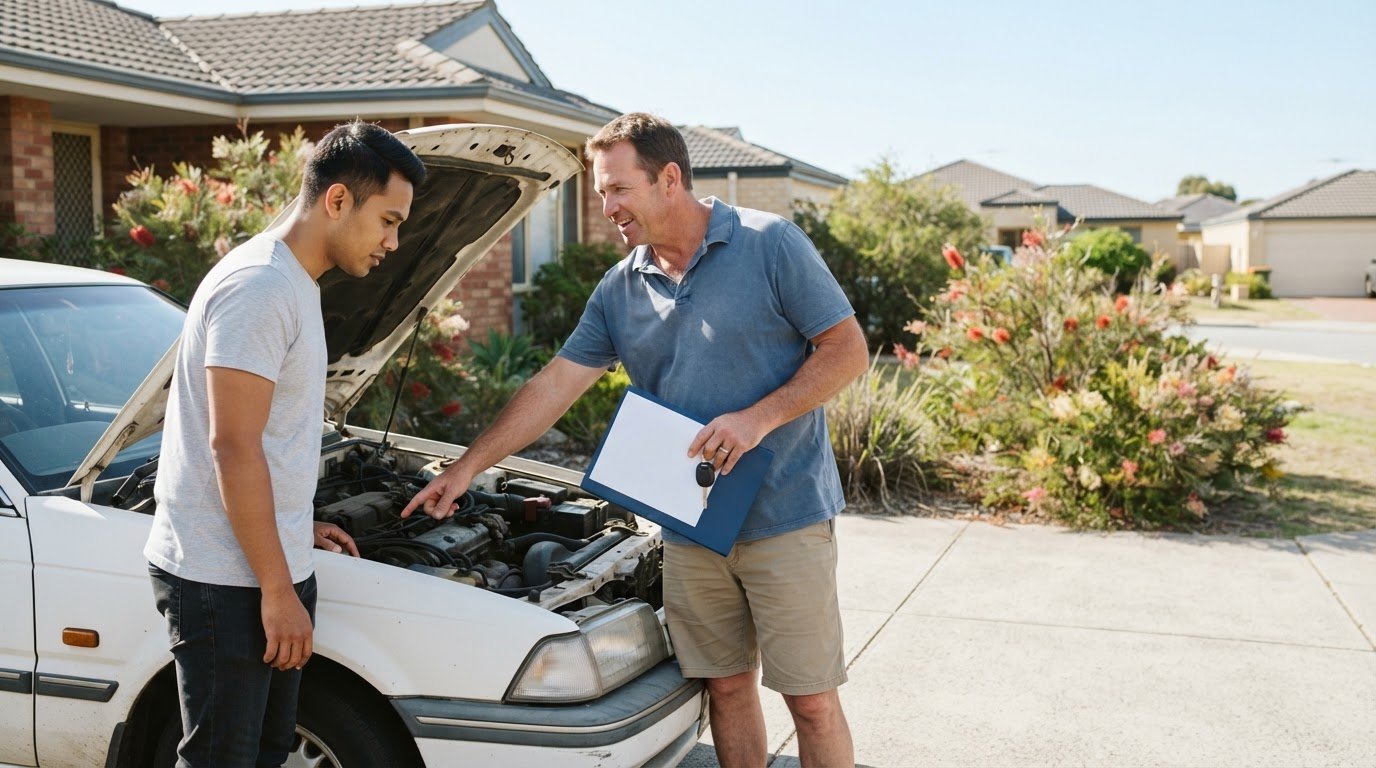
A roadworthy certificate isn’t a prerequisite for a private car sale in WA. You can sell a car without a roadworthy certificate in WA, but disclose known problems clearly before agreeing on a sale. Be upfront about the car’s condition and any faults you know about.
If you’re trying to get rid of a car, you may be weighing up a private sale, what to tell a buyer and which paperwork to prepare. This guide explains the practical checks that can help make a private sale clear and straightforward.
You’ll learn what buyers may want to inspect, how to describe known defects and what documents to prepare for the transfer. You’ll also find out when private selling may be less practical for a damaged or unwanted vehicle.
Key Takeaways
- You can sell a car privately in WA without a roadworthy certificate, but be clear with the buyer about its condition.
- Gather the car’s service history and ownership details, and understand what a PPSR check can reveal before sale.
- Record known defects in writing and keep a copy of what you’ve told the buyer.
- Prepare the transfer paperwork and submit the required notice of disposal after the sale.
- If private sale feels impractical for a damaged or unwanted vehicle, car removal may be another option to consider.
Written-off vehicles, stolen vehicles and finance checks
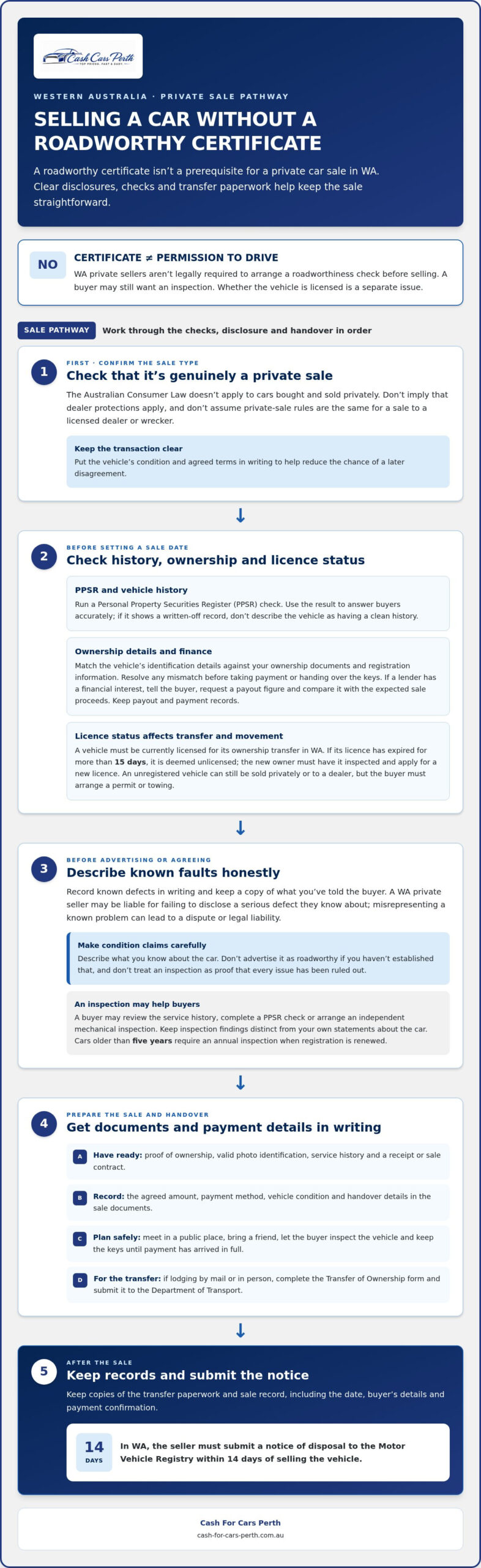
- Run a Personal Property Securities Register (PPSR) check before setting a sale date, then use the result to answer buyers accurately. A written-off record may affect a buyer’s decision, so don’t describe the vehicle as having a clean history if the check shows otherwise.
- Match the vehicle’s identification details against your ownership documents and registration information. If details don’t match, pause the sale and resolve the discrepancy before taking payment or handing over the keys. If you’re unsure whether you have the right to sell the vehicle, settle the ownership issue first. Keep proof of ownership ready for a buyer to review.
- If a lender has a financial interest in the car, tell the buyer about the finance before agreeing to sell. Ask the lender for a payout figure, then compare it with the expected sale proceeds. Use the proceeds to pay off the loan or cover any shortfall yourself. Keep the payout details and payment record with your sale documents.
- Check the vehicle licence status before arranging transport. A vehicle must be currently licensed for its ownership transfer in WA. If its licence has expired for more than 15 days, it is deemed unlicensed; the new owner must have it inspected and apply for a new licence. A temporary movement permit allows an unlicensed vehicle to be moved for inspection or repairs before licensing, according to Transport WA.
- Separate roadworthiness from registration requirements. WA private sellers aren’t legally required to arrange a roadworthiness check before selling, although a buyer may want an inspection. Cars older than five years require an annual inspection when registration is renewed. Describe what you know about the car’s condition, and don’t present an inspection as proof that every issue has been ruled out.
- Prepare proof of ownership, valid photo identification and a receipt or sale contract. Set a price that reflects the vehicle’s condition, service history, written-off status and any finance to be paid out. Record the agreed amount and payment method in the sale documents. If lodging the transfer by mail or in person, complete the Transfer of Ownership form and submit it to the Department of Transport.
- Keep copies of the transfer paperwork and your sale record, including the date, buyer’s details and payment confirmation. In WA, the seller must submit a notice of disposal to the Motor Vehicle Registry within 14 days of selling the vehicle. If the car is unregistered, it can still be sold privately or to a dealer; provide a receipt, and the buyer must arrange a permit or towing.
Roadworthiness checks for private sales in WA
WA private sellers aren’t legally required to arrange a roadworthiness check before selling. Rules also depend on the type of transaction: the Australian Consumer Law doesn’t apply to private car sales, and that position shouldn’t be assumed for a sale to a licensed dealer or wrecker.
- Decide whether a private sale suits the vehicle’s condition. A car that can be inspected and driven may attract private buyers, while a damaged or unusable vehicle may be easier to dispose of through removal. Compare the time and effort involved in enquiries, inspections and handover with the outcome you want.
-
Understand consumer law for private sales
Check that the transaction is genuinely private before relying on private-sale rules. The Australian Consumer Law doesn’t apply to cars bought and sold privately, so don’t describe a private sale as a dealer sale or imply that dealer protections apply. Put the vehicle’s condition and agreed terms in writing to reduce the chance of a later disagreement.
-
Understand seller rules and legal risks
Identify whether the buyer is purchasing privately or as a licensed dealer or wrecker. Private sellers and businesses aren’t the same type of seller, so don’t assume the rules for one transaction apply to another. A WA private seller may be liable for failing to disclose a serious defect they know about. Misrepresenting a known problem can lead to a dispute or legal liability.
- Consider arranging an inspection, even though WA law doesn’t require a private seller to obtain a roadworthiness check before sale. An inspection can give buyers clearer information about the vehicle’s condition. Buyers can also review the service history, complete a PPSR check and arrange an independent mechanical inspection. Keep inspection findings distinct from your own statements about the car.
- Prepare the sale documents before publishing an advertisement. Have proof of ownership, valid photo identification and a receipt or contract of sale ready. Set your price based on the service history and known condition, then describe the vehicle accurately. For example, don’t advertise a car as roadworthy if you haven’t established that.
- Plan a safe viewing and payment process. Meet the buyer in a public place, bring a friend and keep the keys until payment has arrived in full. Let the buyer inspect the vehicle and discuss concerns before agreeing to the sale. Record the agreed price, payment and handover in the receipt or contract.
- Choose removal rather than a private handover if the vehicle’s condition makes inspections or transport impractical. A private sale means managing enquiries, viewings and payment; removal offers another way to dispose of an unwanted or damaged vehicle. Consider which option best suits the car’s condition and your priorities.
Selling a car without a roadworthy certificate in WA
You can sell a car privately without a roadworthy certificate in Western Australia. Choose a sale method that suits its condition, licence status and whether buyers can inspect it.
- Separate the certificate question from the transport question. A roadworthy certificate isn’t required for a private sale, but that doesn’t establish whether the car can be driven after purchase. If it’s unregistered, the buyer must arrange a permit or towing. According to Transport WA, a temporary movement permit allows an unlicensed vehicle to be moved for inspection or repairs before licensing.
- Describe mechanical issues precisely before arranging a viewing. State whether the engine starts, whether the car moves under its own power and which faults you know about. Don’t advertise it as ready to drive if you can’t support that description. Clear details help buyers decide whether to inspect it, arrange transport or consider another vehicle.
-
Choose a buyer or removal service
Compare a private buyer with a wrecker or car removal service based on the vehicle’s condition. A running car with service records may suit a buyer willing to inspect it, while a damaged or non-running vehicle may be difficult to view or transport. Explain its condition and licence status before agreeing on payment or collection. Don’t assume a buyer will arrange towing unless that’s agreed.
- Sell a damaged or non-running car as-is only with an accurate description. List visible damage, known mechanical faults and whether the vehicle starts or moves. Take clear photos of the damage and keep a written record of what you disclosed. “As-is” wording doesn’t replace telling a buyer about a serious defect you know about.
-
Plan the sale of a non-roadworthy car
Set out the sale steps before accepting an offer: share details about the condition, arrange an inspection, agree how the vehicle will be transported, then confirm payment and handover. If it’s unregistered, make sure the buyer understands they must arrange a permit or towing. Keep the receipt or contract with the agreed terms and payment record.
- Check finance and ownership before transferring the vehicle. If a loan remains, tell the buyer and obtain a payout figure from the lender. Work out whether the sale proceeds will cover the loan or whether you’ll need to pay a shortfall. Include the transfer paperwork in your handover plan so the payment and change of ownership are clearly recorded.
- Choose a private sale if you can manage buyer questions, inspections and handover. Consider wreckers or car removal services if damage, mechanical faults or transport needs make a private viewing impractical. Whichever route you choose, keep the vehicle description consistent from the first enquiry to the final receipt.
Disclosing known defects
Before selling your car, make a clear record of faults you know about. A WA private seller may be liable for failing to disclose a serious defect they know about.
- Write down each known problem before creating an advertisement. Be specific: note an engine warning light, a window that won’t operate or damage to a panel. Describe what you’ve observed rather than guessing at the cause. If a mechanic has diagnosed a fault, record the diagnosis accurately and keep any related paperwork.
- Separate confirmed faults from symptoms you haven’t diagnosed. For example, say the engine sometimes loses power if that’s what you’ve experienced. Don’t present an assumed cause as a confirmed diagnosis. This gives buyers useful detail without overstating what you know about the vehicle’s condition.
- Tell each interested buyer about relevant known issues before they decide. Include the information in the advertisement where practical, then repeat key details during enquiries and inspections. If a buyer asks about a specific area, answer directly. Don’t rely on a brief “sold as-is” phrase to disclose a serious defect you’ve identified.
- Keep a written record of what you disclosed and when. Save the advertisement, buyer messages, inspection notes and signed sale paperwork together. If you discuss a fault in person, add a short note to your records afterwards. Clear records can help show what information the buyer received before agreeing to purchase.
- Update your description if you discover another fault before handover. For example, if a warning light appears after the advertisement goes live, tell the buyer before completing the sale. Don’t leave an earlier description unchanged if you know it no longer reflects the vehicle’s condition. Share the updated information and record the discussion.
- Make sure your receipt or contract matches what you disclosed. List the faults discussed, the vehicle’s condition and any documents provided, such as a mechanic’s report. Ask the buyer to acknowledge receiving those details in the paperwork. Keep a copy with your ownership and payment records.
- Use the same accurate description when speaking with a private buyer, dealer or wrecker. If you’re unsure how to describe a fault, stick to what you’ve observed and any written diagnosis. Department of Transport paperwork records the ownership transfer; it doesn’t replace telling the buyer about a known serious defect.
Documentation and legal responsibilities
- Gather ownership and identity records before accepting payment. Keep proof of ownership, valid photo identification and the vehicle’s registration details together. Match the vehicle information across each document, then prepare a receipt or sale contract showing the buyer, agreed amount, payment and handover. Accurate paperwork gives both parties a record of what changed hands.
- Complete the Transfer of Ownership form as the seller and submit it to the Department of Transport. In Western Australia, this form records the change in ownership. Check that the vehicle details and buyer information match before lodging it. Keep a copy of the completed form with your sale documents.
- Submit a notice of disposal to the Motor Vehicle Registry within 14 days of selling the vehicle. Record the sale date so you can meet that deadline. Keep evidence of submission alongside the receipt or contract. The notice helps record that you’ve disposed of the vehicle, while the ownership transfer paperwork records the buyer’s details.
- Check the vehicle licence status before arranging the ownership transfer. The vehicle must be currently licensed for its ownership transfer to occur in WA. If its licence expired more than 15 days ago, it’s deemed unlicensed, and the new owner must have it inspected and apply for a new licence. Make the status clear in the sale paperwork.
- Account for the transfer fee and vehicle licence duty when discussing the handover. Both apply to a vehicle licence transfer in Western Australia. Don’t include them in the selling price unless your agreement explicitly says so. State the agreed price separately in the receipt or contract to avoid confusion about payment.
- Check inspection requirements against the car’s age and registration renewal. Cars older than five years require an annual inspection when their registration is renewed. That renewal inspection is separate from a private buyer’s decision to arrange an independent mechanical inspection. Keep any inspection records you have and give the buyer an accurate account of them.
- Agree on transport before handing over an unlicensed vehicle. An unregistered car can still be sold privately or to a dealer, but provide a receipt and ensure the buyer arranges a permit or towing. Keep the transport arrangement in your sale records.
- Keep the signed contract, payment record, transfer paperwork and notice of disposal confirmation together. If a lender has an interest in the vehicle, retain the payout information and evidence that the loan was settled. An organised file helps you answer later questions about the sale, payment and change of ownership.
Cash For Cars Perth: Scrap Car Removal
Cash For Cars Perth provides Scrap Car Removal for unwanted vehicles that may be difficult to sell privately. If your car has accident damage, mechanical problems or won’t run, removal can be a practical alternative to private inspections and negotiations. The business also handles Accident Car Removals, Cash for Unwanted Cars and Truck Removal Perth.
Share accurate details about the vehicle’s condition and ownership when arranging removal. Cash For Cars Perth provides cash payments and free removal for unwanted vehicles in any condition, including cars that are damaged or won’t run.
Contact Cash For Cars Perth to discuss removing your unwanted vehicle.
Choose the next step that suits your situation
Decide what matters most: managing a private sale yourself or avoiding the work of finding an individual buyer. If you plan to sell a car without a roadworthy certificate in WA, consider how much time and effort you’re prepared to put into enquiries, viewings and handover. Choose a route you can manage confidently, from the first conversation to the final paperwork.
If removal better suits your plans, discuss your vehicle with Cash For Cars Perth. Share its condition and what you want to do, then consider whether a free removal and cash offer are right for you.
Choose the option that feels manageable, then move forward with a clear plan for the sale.
Frequently Asked Questions
I Just Want to Get Rid of My Car – What Are My Options?
You can sell privately, sell to a dealer or arrange car removal, depending on the vehicle and your priorities. A private sale involves finding buyers and managing viewings; removal may suit a damaged or non-running car that’s difficult to present. An unregistered car can also be sold privately or to a dealer, but the buyer must arrange a permit or towing. Compare the steps involved before choosing.
What is an RWC?
RWC is short for roadworthy certificate, a document associated with an inspection of a vehicle’s roadworthiness. It’s different from registration and ownership paperwork. In WA, private sellers aren’t legally required to obtain one before selling a car. A buyer may still arrange an independent mechanical inspection. Treat the result as information about the checks performed, not as a substitute for disclosing faults you know about.
When is an RWC Typically Required for Selling a Car in WA?
A roadworthy certificate isn’t required for a private car sale in WA. Don’t confuse that with the annual inspection required for cars older than five years when their registration is renewed. That inspection relates to registration, not a private-sale certificate. If the vehicle’s licence has expired, check its status before agreeing on handover arrangements, as an unlicensed car may need a permit or towing.
Can you sell a car in Western Australia without a roadworthy certificate?
Yes. You can sell your car without a roadworthy certificate in WA through a private sale, provided you’re clear about its condition and known defects. For example, tell prospective buyers if the car starts but has a braking issue, or if it doesn’t run. Put important disclosures in writing so the buyer can consider them before agreeing to buy.
Does WA require a roadworthy inspection or certificate to sell a used car privately?
No. WA doesn’t legally require a private seller to arrange a roadworthiness check before selling a used car. An inspection can still help a buyer assess the vehicle, alongside its service history and a PPSR check. If a buyer arranges an independent mechanical inspection, agree on access and timing before the appointment. Keep the inspection separate from your own description of the vehicle’s condition.
What paperwork is required when selling a car in WA without a roadworthy certificate?
Prepare proof of ownership, valid photo identification and a receipt or contract of sale. Include the vehicle details, buyer and seller information, agreed payment and handover date. The Transfer of Ownership form is also needed to record the change. Keep copies of the signed documents and payment record together. Not having a roadworthy certificate doesn’t remove the need to organise sale and transfer paperwork.
How do buyer and seller transfer vehicle ownership in WA, and what are the deadlines and fees?
Complete the Transfer of Ownership form and submit it to the Department of Transport. The seller must lodge a notice of disposal with the Motor Vehicle Registry within 14 days of sale. A transfer fee and vehicle licence duty apply, although the amount depends on the transfer. Buyer and seller share responsibility for ensuring the vehicle licence is free from encumbrances during the registration transfer.
Must the seller disclose defects or that the car is unroadworthy in WA?
Tell the buyer about serious defects you know about, and describe the vehicle accurately. A WA private seller may be liable for failing to disclose a known serious defect. For instance, say that the engine overheats rather than describing the car as being in good condition. Add known faults to the written sale record and keep a copy with your contract or receipt.
0 Comments